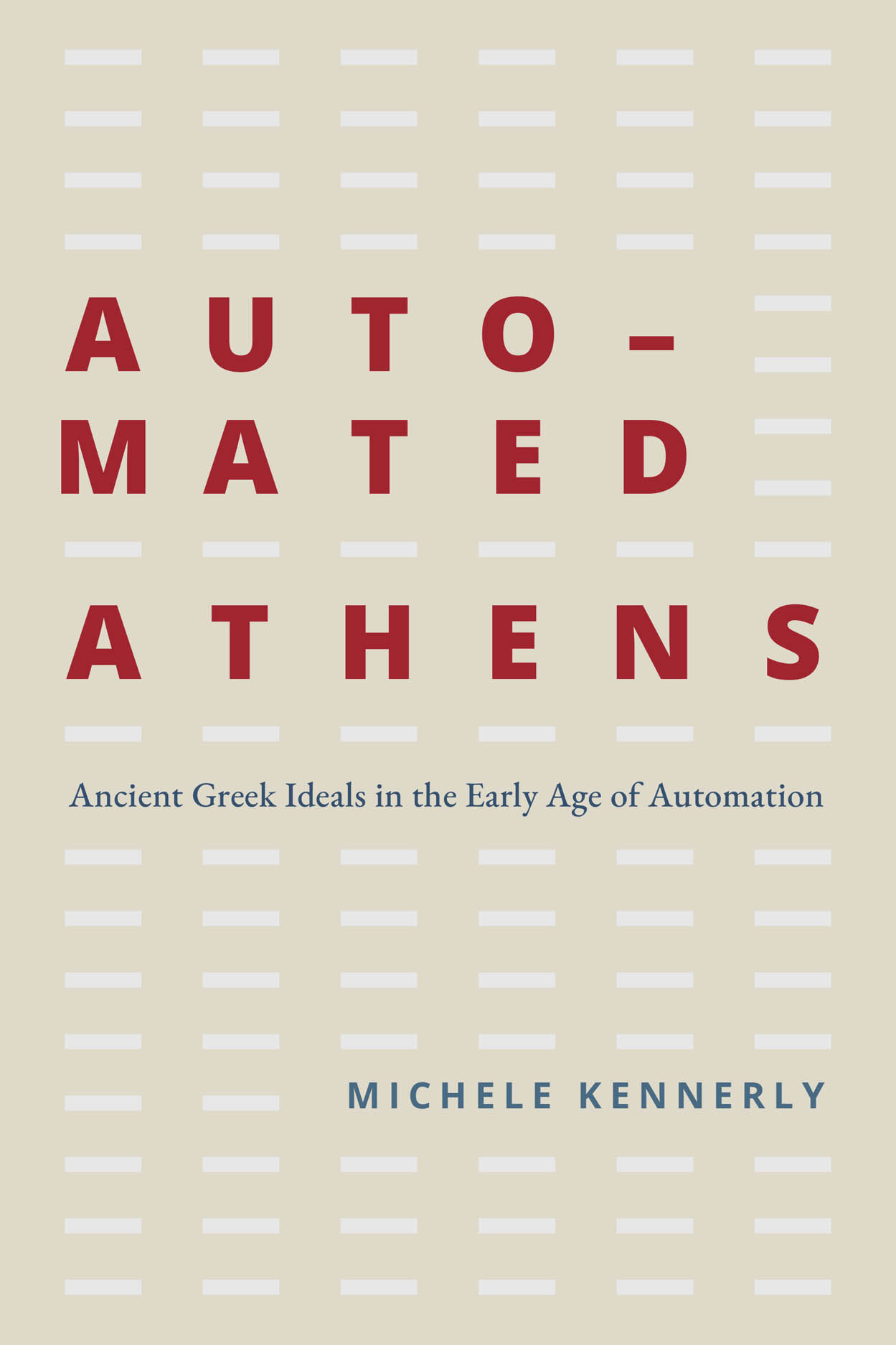
Automated Athens
Ancient Greek Ideals in the Early Age of Automation
Automated Athens
Ancient Greek Ideals in the Early Age of Automation
A critical history of the recurring idea that technology will free us from work and bring about a truly democratic society.
In popular thought, ancient Athens endures as a place ahead of its time—the birthplace of democracy, a cultural center, and a model toward which modern societies should strive. In Automated Athens, Michele Kennerly examines the many and frequent appeals to this nostalgic vision of the ancient city-state throughout the early age of computerized automation. In the mid-twentieth century, people hoped that automation would free us from mindless, dehumanizing work so that we could attend to creative and communal pursuits. Proponents appealed to ancient Athens, saying automated systems and machines would stand in for the craftsmen, enslaved people, and subordinated women who performed the undesirable work that enabled that city-state’s flourishing. Automated Athens scrutinizes this appeal as it moves chronologically into present debates about the promise of automation and AI. For Kennerly, our inability to settle debates about where accelerating automation may take us, especially politically, reveals a deeper cultural indecisiveness about how to live well and live well together.
Reviews

Table of Contents
Introduction. Athens Appeals
1. Why Plato Is Missing (Norbert Wiener)
2. Athens Emerges in the Age of Automation (Hannah Arendt)
3. Athens as Inspiration for Cybercultural Eutopia (Alice Mary Hilton)
4. Extensions into Past and Future Time
5. Aristotle’s Line on Automation
6. Aristotle as Opener and Closer in the Twenty-First Century
Conclusion. What Are We Waiting For?
Acknowledgments
Notes
Bibliography
Index