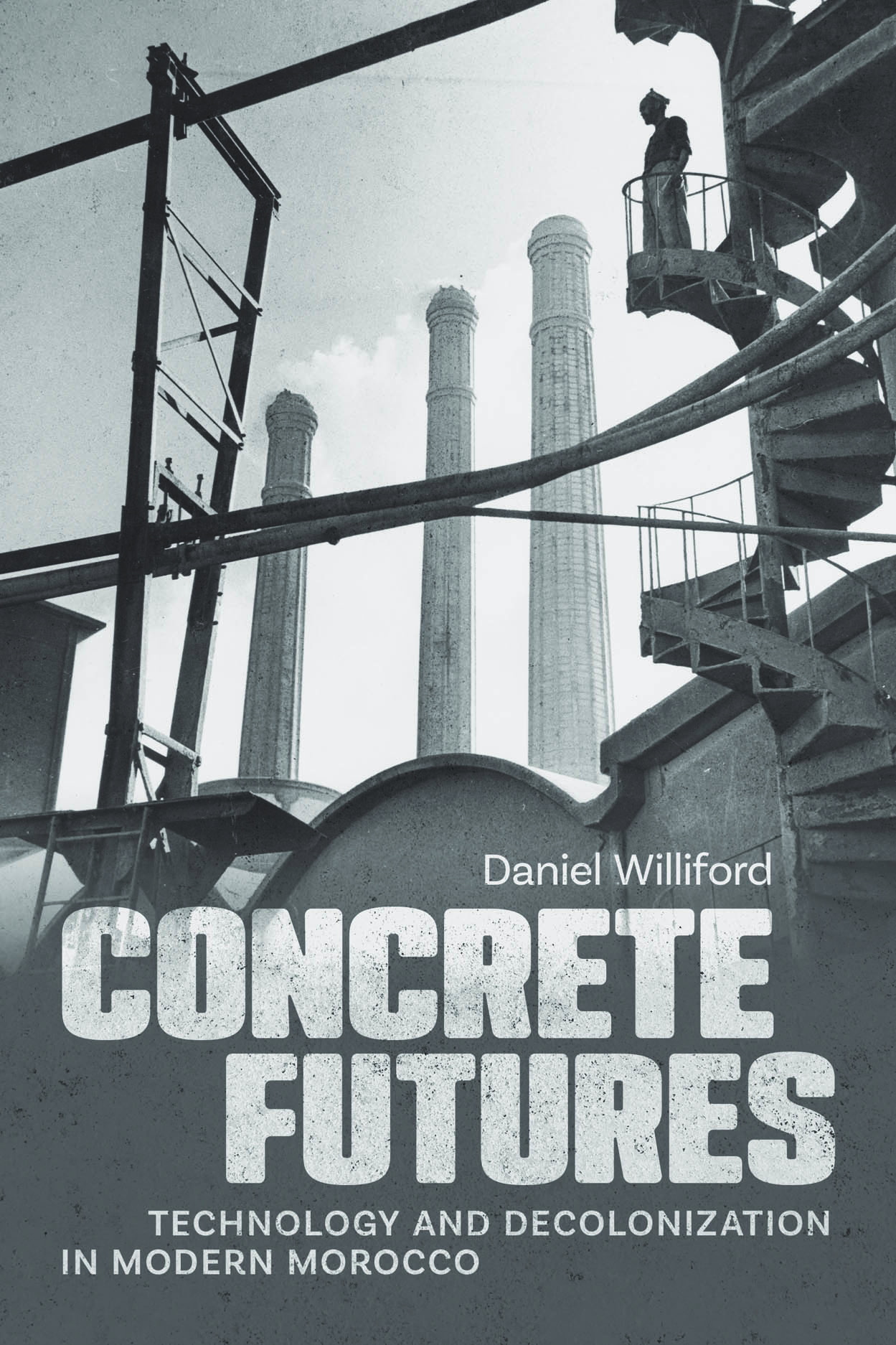
Concrete Futures
Technology and Decolonization in Modern Morocco
Concrete Futures
Technology and Decolonization in Modern Morocco
Struggles over critical urban technologies during and after Morocco’s French Protectorate reveal a fundamental conflict over the nature of decolonization in the country.
Concrete Futures is a history of concrete that complicates our view of the building material, revealing it as a site of contestation over resources and authority in twentieth-century Morocco. Beginning with the French protectorate period between 1912 and 1956 and continuing into the post-independence era, Daniel Williford uses debates surrounding concrete building technologies as a conduit through which to explore struggles over colonization, modernization, and decolonization. The half-finished cinder block buildings found in cities all over Morocco, he shows, are a product of the system that colonial engineers and officials developed to deal with labor disputes, contests over knowledge, and anticolonial unrest.
By exploring concrete and its uses, Williford discloses how conflicts between experts, workers, and residents over construction and urban renewal—from the introduction of reinforced concrete to strategies of slum clearance—shaped the meaning and the trajectory of decolonization in Morocco.
Reviews

Table of Contents
Note on Transliteration and Translation
List of Abbreviations
Introduction
Chapter 1. Concrete and Crisis in the Early Protectorate
Chapter 2. Matters of Piety and the Politics of Matter During the Interwar Years
Chapter 3. Fast and Slow Violence in the Postwar Period
Chapter 4. Labor and Debt in the Era of Decolonization
Chapter 5. Disaster and Experimentation After Independence
Chapter 6. Development and Desire Through the Years of Lead and Neoliberalism
Conclusion
Acknowledgments
Notes
Bibliography
Index