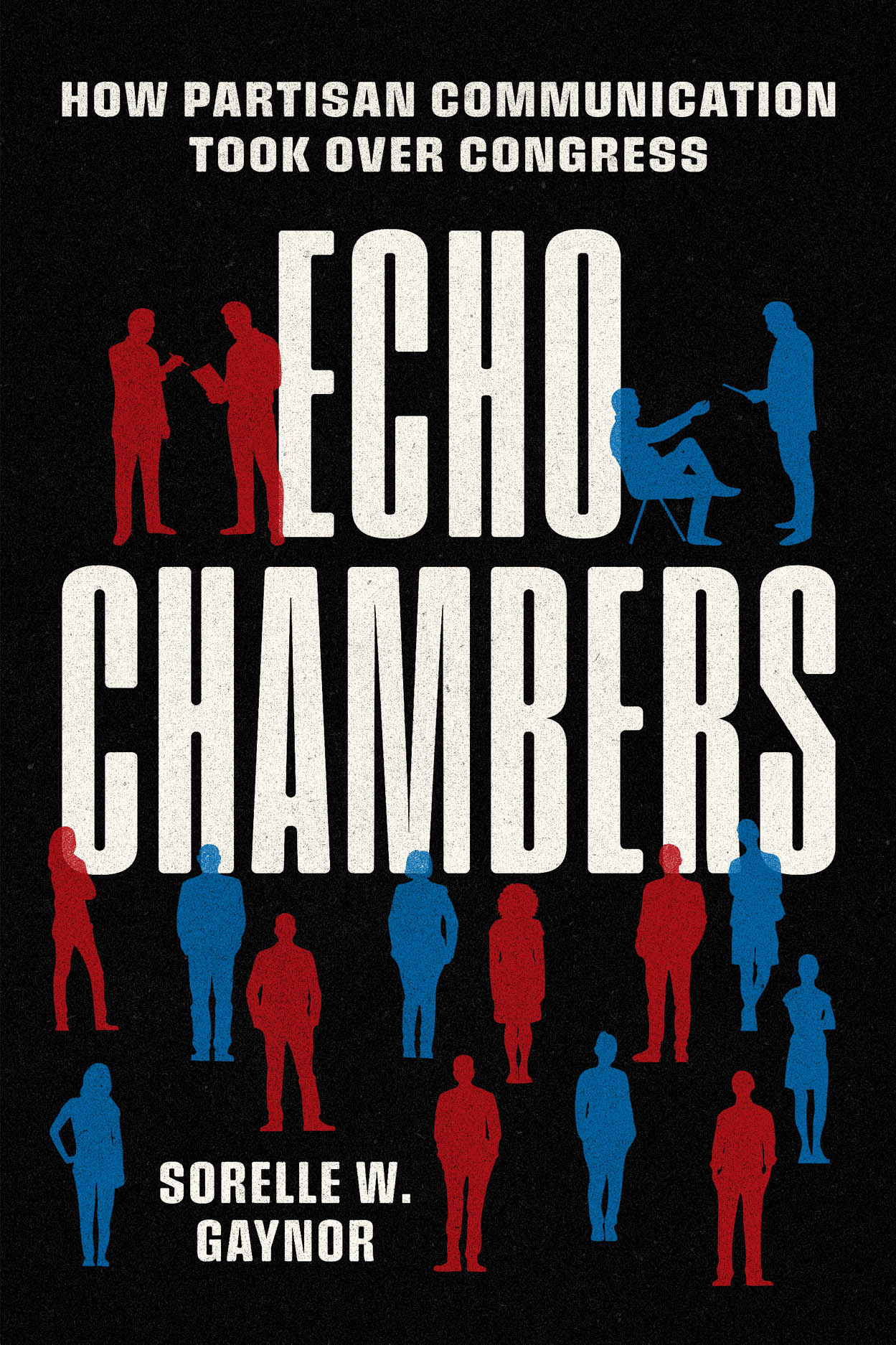
Echo Chambers
How Partisan Communication Took Over Congress
Echo Chambers
How Partisan Communication Took Over Congress
An incisive analysis of how congressional communication with constituents has changed and what this means for representation and polarization.
Members of Congress have a duty to talk to their constituents back home about what’s going on in Washington. But today, the average politician lacks the time, resources, and knowledge necessary to coherently explain the bills and legislative actions up for debate. Therefore, they turn to those who hold the keys to the chamber: party leaders.
Consequently, Congress is now more reliant than ever on its leaders’ partisan talking points, and constituents hear more about nationalized political battles rather than the local issues affecting their districts. Drawing on large-scale text analysis, campaign expenditures, and congressional district data, as well as in-depth interviews, Echo Chambers examines how partisan communication took over Congress, the key differences in that messaging across parties and chambers, and what these combined forces mean for US citizens today.
216 pages | 26 halftones, 3 line drawings, 11 tables | 6 x 9 | © 2027
Chicago Studies in American Politics
Political Science: American Government and Politics
Reviews

Table of Contents
Chapter 1. Introduction
Chapter 2. How Members of Congress Communicate, and Why Leaders Have Taken Over
Chapter 3. How Leaders Lead on Communications
Chapter 4. The Content of Leader-Led Messaging
Chapter 5. The Demands and Desires of Rank-and-File Members
Chapter 6. Reaching Beyond the Chamber
Acknowledgments
Appendix
Notes
References
Index