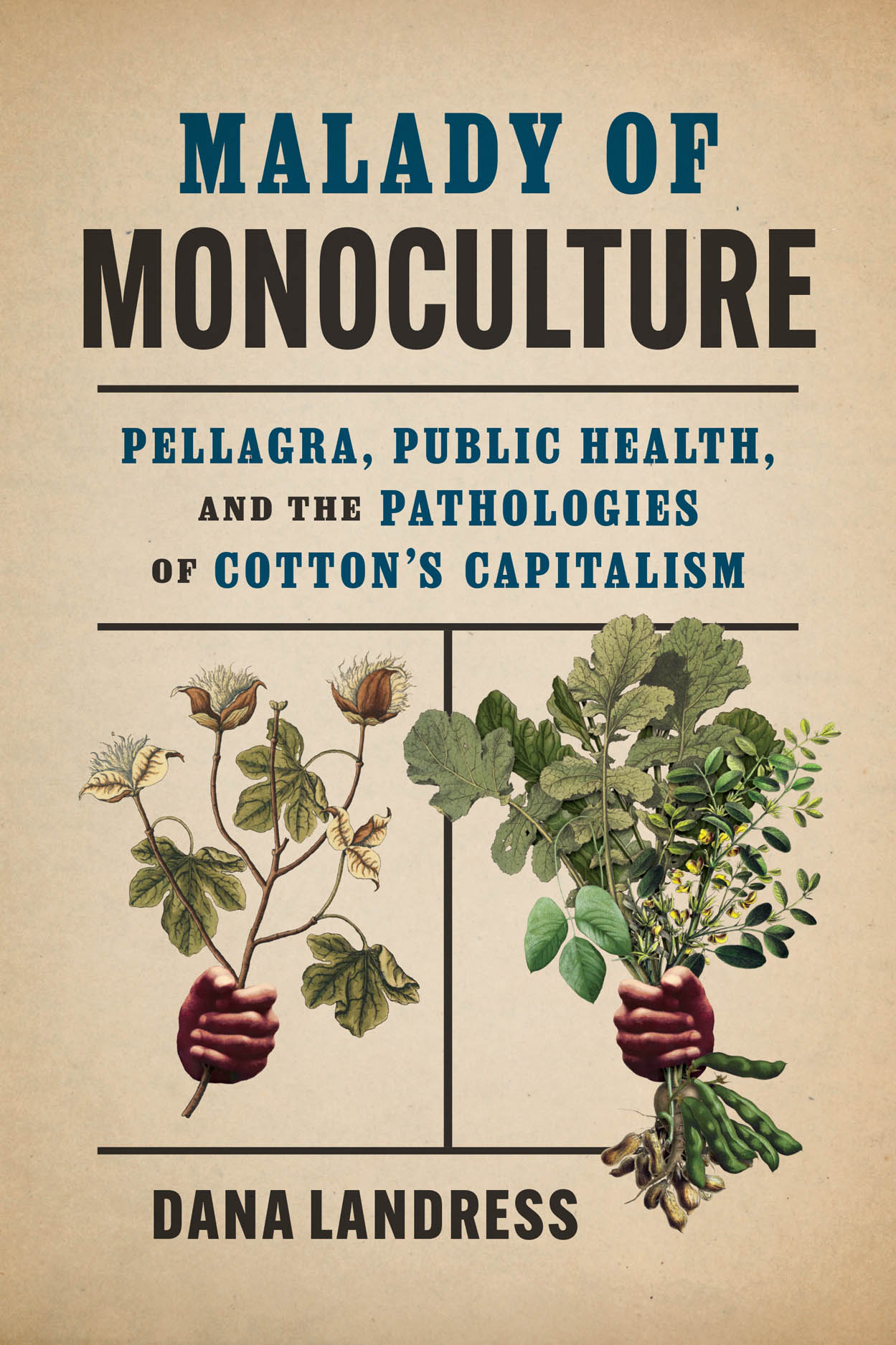
Malady of Monoculture
Pellagra, Public Health, and the Pathologies of Cotton’s Capitalism
Malady of Monoculture
Pellagra, Public Health, and the Pathologies of Cotton’s Capitalism
How the cotton industry restricted sharecroppers’ access to nutritious food, a public health crisis that spurred a wave of influential and inspiring activism.
Pellagra, a nutritional deficiency disease, was once widespread in the southern United States, where it was concentrated in areas of high-yield cotton production. This wasn’t a coincidence. In the early twentieth century, pellagra was ubiquitous in regions where monocultural cotton production foreclosed cotton workers’ access to nutritious foods. Planters paid sharecroppers and millworkers in their own currency—tokens, coins, and other substitutes for money—and sold them unhealthy and overpriced food in company-owned stores. Employers kept workers poor through wage theft, predatory credit systems, and labor coercion, all of which maintained a system of food scarcity.
In Malady of Monoculture, Dana Landress reveals how the unrelenting demands of the cotton economy during the Jim Crow South created a public health crisis in the form of pellagra. She carefully details a “closed food system” that restricted workers’ diets through employer-generated currency; the use of food as an instrument of labor compulsion; manufactured debt structures; alliances between government and private industry; and restrictions on foraging, gardening, and land use. Though official public health programs framed pellagra in personal and behavioral terms, those afflicted with the illness actively challenged the closed food system through union organizing, community health care, freedom farms, and collective action lawsuits. Excavating the landmark contributions of Black nutritionists to the field of public health, Landress spotlights the many constituencies that worked tirelessly to combat hunger and foregrounds their creativity, resilience, and determination.
320 pages | 32 halftones, 2 tables | 6 x 9 | © 2027
History: American History, Environmental History
Reviews

Table of Contents
Preface
Introduction
Chapter 1. Engineering the AIH’s Closed Food System
Chapter 2. Pioneering Nutrition Research at Tuskegee
Chapter 3. The Cotton Mill Colic and the Limits of Philanthrocapitalism
Chapter 4. The 1927 Delta Flood and the “Work or Starve” Rule
Chapter 5. “Gardens for Health and for Wealth”
Chapter 6. New Deal, Old South
Chapter 7. The Hunger Wars
Conclusion. The False Death of Pellagra
Acknowledgments
Notes
Sources Essay
Bibliography
Index