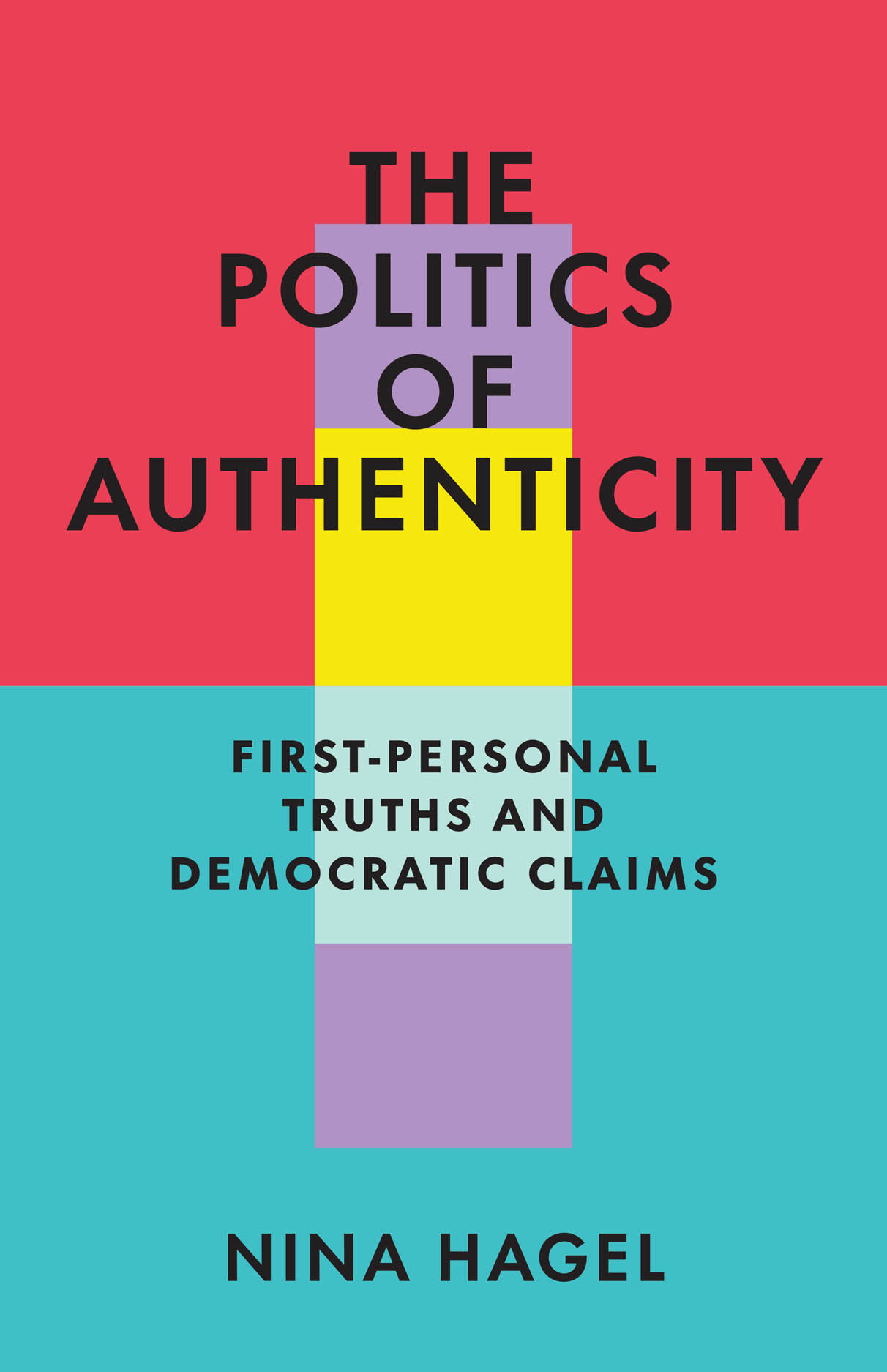
The Politics of Authenticity
First-Personal Truths and Democratic Claims
The Politics of Authenticity
First-Personal Truths and Democratic Claims
A qualified defense of authenticity claims in contemporary politics.
On both the Left and Right, we see a range of political claims cast in terms of authenticity, from transgender persons seeking recognition of who they truly are to religious business owners requesting exemptions from antidiscrimination laws. For claimants, what is often at stake is an inner self that would be harmed if changed or concealed. At the same time, many scholars are skeptical of authenticity claims, with some worrying that they are too nebulous and inward-looking and others fearing that they contain too much anti-democratic potential. There is also the added difficulty of determining when and on what grounds to accept a claim of authenticity.
Nina Hagel argues that while invoking authenticity has serious risks, it remains a crucial democratic resource. Through an engagement with canonical and contemporary political theorists, and an analysis of current political struggles centering on authenticity, Hagel advances a defense of authenticity’s democratic potential, alongside a practice for interpreting and invoking such claims. While one might assume that this perspective clashes with the post-modern view that there is no true self outside of politics and history, Hagel puts forward a non-essentialist understanding of authenticity that emphasizes subject formation and emancipation. Hagel argues that authenticity claims best support democracy when they collectively steward, rather than overcome, the social powers that shape our identities. We ignore authenticity claims at our peril, since the objects of such claims are the norms and practices that make us who we are.
Reviews

Table of Contents
Introduction: The Stakes of Authenticity
Essentialism and Its Discontents
The Uses and Limits of Theory
Authorizing Strategies
What Does It Mean to Be Oneself?
Outline of the Book
Chapter 1. Essentialism, Emancipation, and the Self: Authenticity’s Meanings and Value
“Being Oneself” as a Normative Self-Relationship
Action and Becoming
Authority and Ownership
Authenticity and Emancipation
From Authenticity to Authenticity Claims
Chapter 2. Social Movements and the Politics of Experience: Being Oneself as a Practice of Critique
Critiques Grounded in an Authentic Self
Critiques Grounded in Experience
Assessing Authenticity Claims
Between Essentialism and Strategic Essentialism
Not Truth but Truthfulness
Chapter 3. Complicity and Resistance: Realizing Oneself Through the Law
Vocation, Artistic Expression, and Conscience
Complicity’s Illiberal Effects
Authenticity Against Democracy
Authenticity as a Practice of Resistance
Chapter 4. Gender and Embodiment in Trans Politics: Visions of Becoming Who One Is
Gender, Self-Knowledge, and Self-Actualization
Essentialism and Its Effects
Beyond Fixity and Certainty
Positive and Negative Authenticities
Conclusion: Democracy and the Powers That Make Us Who We Are
Acknowledgments
Notes
Index