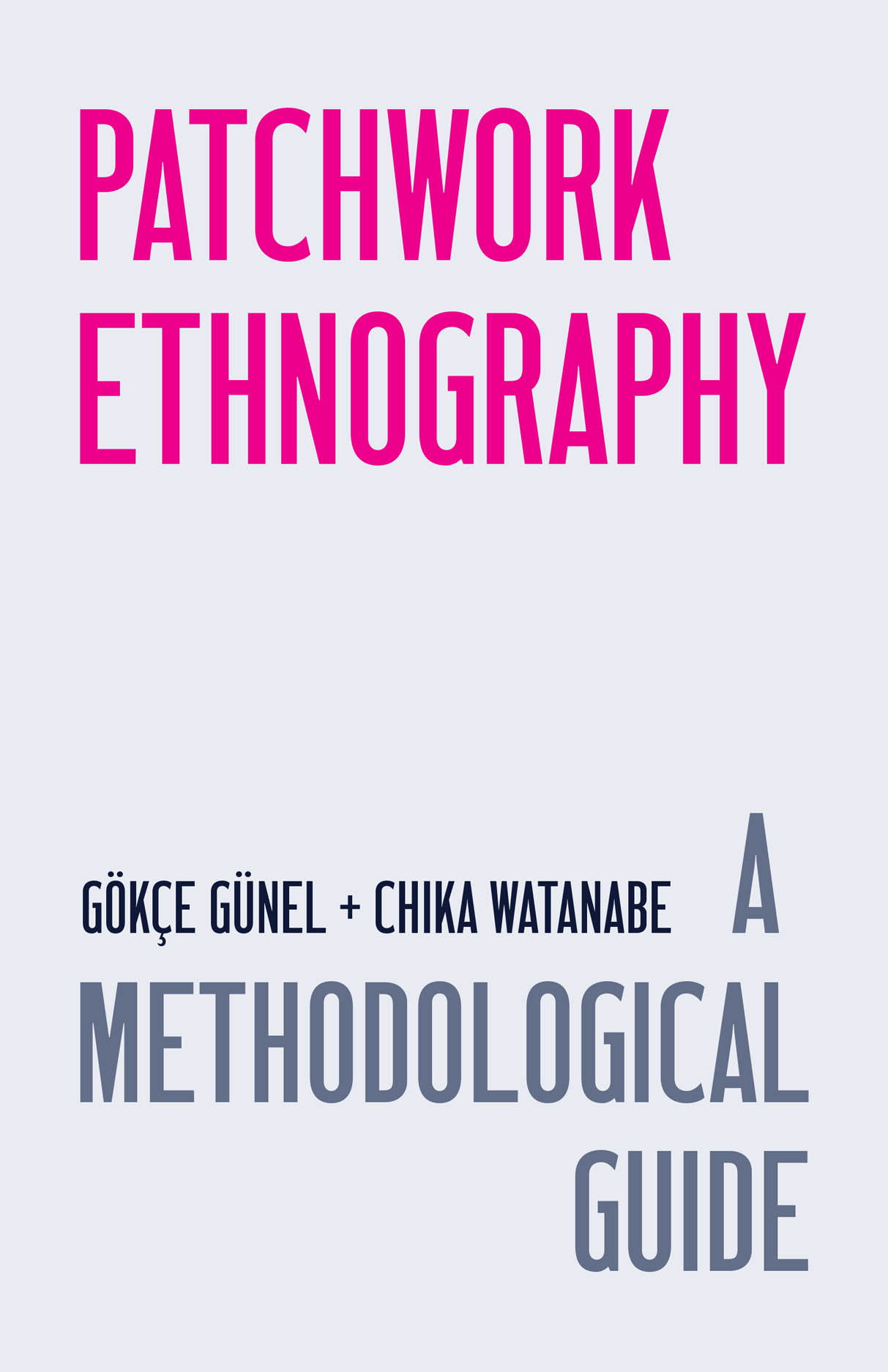
Patchwork Ethnography
A Methodological Guide
Patchwork Ethnography
A Methodological Guide
Offers an accessible new way to think critically and transparently about how researchers, especially those doing ethnographic work, can balance their personal commitments with long-term research.
For ethnographers, spending a year or longer in a faraway place conducting fieldwork is increasingly untenable amid life responsibilities, rising workloads, and constraints imposed by disability, precarity, and geopolitical factors. If ethnographic methods are to remain viable and broadly relevant for a diverse group of people in anthropology and beyond, Gökçe Günel and Chika Watanabe argue, we need to examine how our personal and professional lives intersect and shape one another.
In Patchwork Ethnography, Günel and Watanabe take seriously the conditions that render long-term fieldwork difficult for so many. Without being prescriptive, the book offers concrete ways for scholars to unpack competing commitments and make the attendant challenges more manageable. Blending theoretical analysis with practical exercises, the authors guide readers to rethink the relationship between their personal lives and their scholarship. Ultimately, they point to ways to transform limitations into catalysts for fresh insights. By highlighting how shifting labor and living conditions profoundly alter knowledge production, Patchwork Ethnography calls for a paradigm shift in ethnographic research.
224 pages | 1 halftones | 5 1/2 x 8 1/2 | © 2027
Chicago Guides to Writing, Editing, and Publishing
Anthropology: Cultural and Social Anthropology
Reviews

Table of Contents
Introduction: A Sigh of Relief
1. What Is Your Research Orientation?
Double Binds, by Dana McLachlin
Double Standards, by Laila Rajani
2. Who Are You in the World?
A Predictable Life, by Kevin Darcy
Countering: An Anticolonial Method, by Rana Abughannam
3. How Do We Cultivate Patchwork Ethnography Sensibilities?
Seams, by Chloe Curtis
“Forever Fields” as Sites of Theorization, by Nithila Kanagasabai
4. Who Is the You-in-Relation?
Friendship as Method, by Genevieve Sekumbo and Marie de Lutz
Staying with Obligations, by Hannah Sender
5. How Do We Analyze with Patchwork Ethnography Sensibilities?
Loose Threads, by Sneha Annavarapu
A New Vocabulary, by Karina Hoření
Conclusion
Afterword, by Danilyn Rutherford
Exercises
Acknowledgments
Readings and References
Index