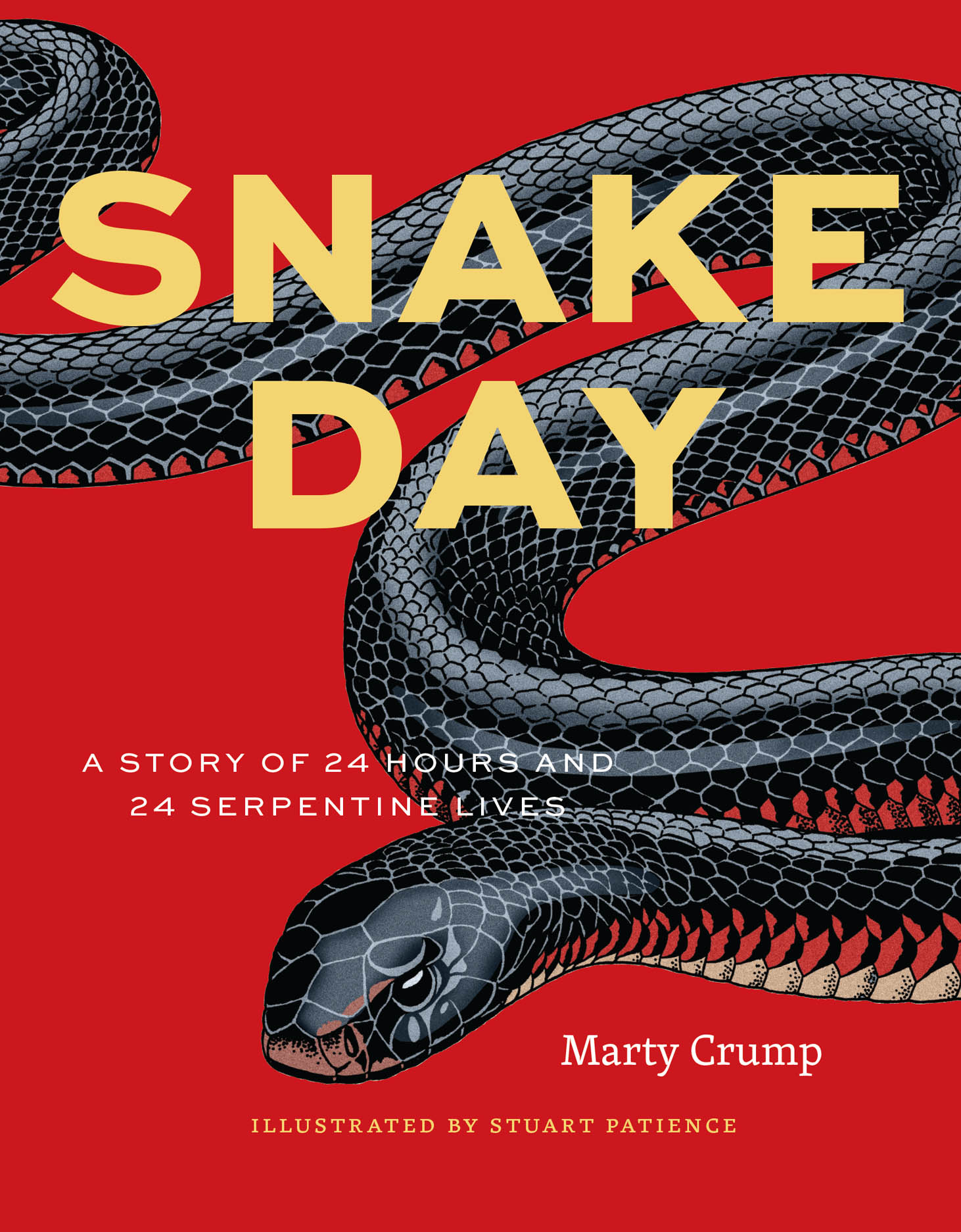
Snake Day
A Story of 24 Hours and 24 Serpentine Lives
9780226842943
9780226842950
Snake Day
A Story of 24 Hours and 24 Serpentine Lives
An hourly guide that follows twenty-four snakes as they find mates, hunt, and survive a changing world.
Does a snake crossing your path trigger delight or dread? The answer is clear for celebrated biologist Marty Crump, who shows us that snakes deserve our respect, admiration, and protection. In her short book Snake Day, each chapter introduces a single snake during a single hour, highlighting twenty-four different species from around the globe.
In the dark morning of a Brazilian forest, we avoid stepping on a jararaca, a nocturnal viper. If she bites, her venom will make our blood pressure—and us—drop. A synthetic version of this venom is now a lifesaving drug, used to treat hypertension and heart failure. Later in the morning, in the Zagros Mountains that trace Iran’s northwest border, what appears to be a tiny arachnid wiggles on the ground. When a hungry warbler approaches for a meal, realizes too late that the spider is actually a snake’s tail, and an Iranian spider-tailed viper makes a meal of the bird. In the early afternoon, in a pine forest outside Atlanta, Georgia, an eastern hognose snake strikes at us—a bluff—and then rolls over and plays dead. By the end of our snake day, we’ll have glimpsed the diversity of this unique group of reptiles, met serpentine friends who frighten and fascinate, and learned how humans can protect these amazing species.
For each hour, celebrated artist Stuart Patience has depicted serpentine scenes in stunning pen-and-ink drawings. Working together to narrate and illustrate these unique moments in time, Crump and Patience have created an engaging read that is a perfect way to spend an hour or two—and a true gift for amateur scientists or anyone who recoils at or relishes the sight of a snake.
Does a snake crossing your path trigger delight or dread? The answer is clear for celebrated biologist Marty Crump, who shows us that snakes deserve our respect, admiration, and protection. In her short book Snake Day, each chapter introduces a single snake during a single hour, highlighting twenty-four different species from around the globe.
In the dark morning of a Brazilian forest, we avoid stepping on a jararaca, a nocturnal viper. If she bites, her venom will make our blood pressure—and us—drop. A synthetic version of this venom is now a lifesaving drug, used to treat hypertension and heart failure. Later in the morning, in the Zagros Mountains that trace Iran’s northwest border, what appears to be a tiny arachnid wiggles on the ground. When a hungry warbler approaches for a meal, realizes too late that the spider is actually a snake’s tail, and an Iranian spider-tailed viper makes a meal of the bird. In the early afternoon, in a pine forest outside Atlanta, Georgia, an eastern hognose snake strikes at us—a bluff—and then rolls over and plays dead. By the end of our snake day, we’ll have glimpsed the diversity of this unique group of reptiles, met serpentine friends who frighten and fascinate, and learned how humans can protect these amazing species.
For each hour, celebrated artist Stuart Patience has depicted serpentine scenes in stunning pen-and-ink drawings. Working together to narrate and illustrate these unique moments in time, Crump and Patience have created an engaging read that is a perfect way to spend an hour or two—and a true gift for amateur scientists or anyone who recoils at or relishes the sight of a snake.
184 pages | 24 halftones | 4 3/4 x 6 | © 2026
Biological Sciences: Behavioral Biology, Natural History
Reviews

Table of Contents
Preface
Artist’s Note
Midnight Gans’s Egg-Eater (Africa)
1 AM Burmese Python (Asia, Introduced Elsewhere)
2 AM Brahminy Blindsnake (Asia, Introduced Elsewhere)
3 AM Jararaca (South America)
4 AM Malagasy Cat-Eyed Snake (Madagascar)
5 AM Green Anaconda (South America)
6 AM Puff Adder (Africa)
7 AM Eastern Coral Snake (North America)
8 AM European Adder (Asia, Europe)
9 AM Iranian Spider-Tailed Viper (Asia)
10 AM Red-Sided Garter Snake (North America)
11 AM Paradise Tree Snake (Asia)
Noon Broad-Headed Snake (Australia)
1 PM Eastern Hognose Snake (North America)
2 PM Turtle-Headed Sea Snake (Asia, Australia, New Caledonia)
3 PM European Grass Snake (Asia, Europe)
4 PM Tiger Keelback (Asia)
5 PM Aesculapian Snake (Asia, Europe)
6 PM Red-Bellied Blacksnake (Australia)
7 PM Neotropical Snail-Eater (South America)
8 PM Black-Necked Spitting Cobra (Africa)
9 PM Northern Pacific Rattlesnake (North America)
10 PM White-Bellied Mangrove Snake (Asia, Australia, Papua New Guinea)
11 PM Boa Constrictor (South America)
Epilogue
Acknowledgments
Further Reading
Index
Artist’s Note
Midnight Gans’s Egg-Eater (Africa)
1 AM Burmese Python (Asia, Introduced Elsewhere)
2 AM Brahminy Blindsnake (Asia, Introduced Elsewhere)
3 AM Jararaca (South America)
4 AM Malagasy Cat-Eyed Snake (Madagascar)
5 AM Green Anaconda (South America)
6 AM Puff Adder (Africa)
7 AM Eastern Coral Snake (North America)
8 AM European Adder (Asia, Europe)
9 AM Iranian Spider-Tailed Viper (Asia)
10 AM Red-Sided Garter Snake (North America)
11 AM Paradise Tree Snake (Asia)
Noon Broad-Headed Snake (Australia)
1 PM Eastern Hognose Snake (North America)
2 PM Turtle-Headed Sea Snake (Asia, Australia, New Caledonia)
3 PM European Grass Snake (Asia, Europe)
4 PM Tiger Keelback (Asia)
5 PM Aesculapian Snake (Asia, Europe)
6 PM Red-Bellied Blacksnake (Australia)
7 PM Neotropical Snail-Eater (South America)
8 PM Black-Necked Spitting Cobra (Africa)
9 PM Northern Pacific Rattlesnake (North America)
10 PM White-Bellied Mangrove Snake (Asia, Australia, Papua New Guinea)
11 PM Boa Constrictor (South America)
Epilogue
Acknowledgments
Further Reading
Index