Shell Day
A Story of 24 Hours and 24 Molluscan Lives
9780226840529
9780226840536
Shell Day
A Story of 24 Hours and 24 Molluscan Lives
An hourly guide that follows twenty-four mollusks to reveal the fascinating lives behind their shells.
From morning to night and from the Arctic to the equator, snails, clams, and other shell-making mollusks have busy days. In this short book, acclaimed author and marine biologist Helen Scales shows readers exactly how these animals spend their time. Each chapter of Shell Day features a single mollusk during a single hour, highlighting twenty-four different species.
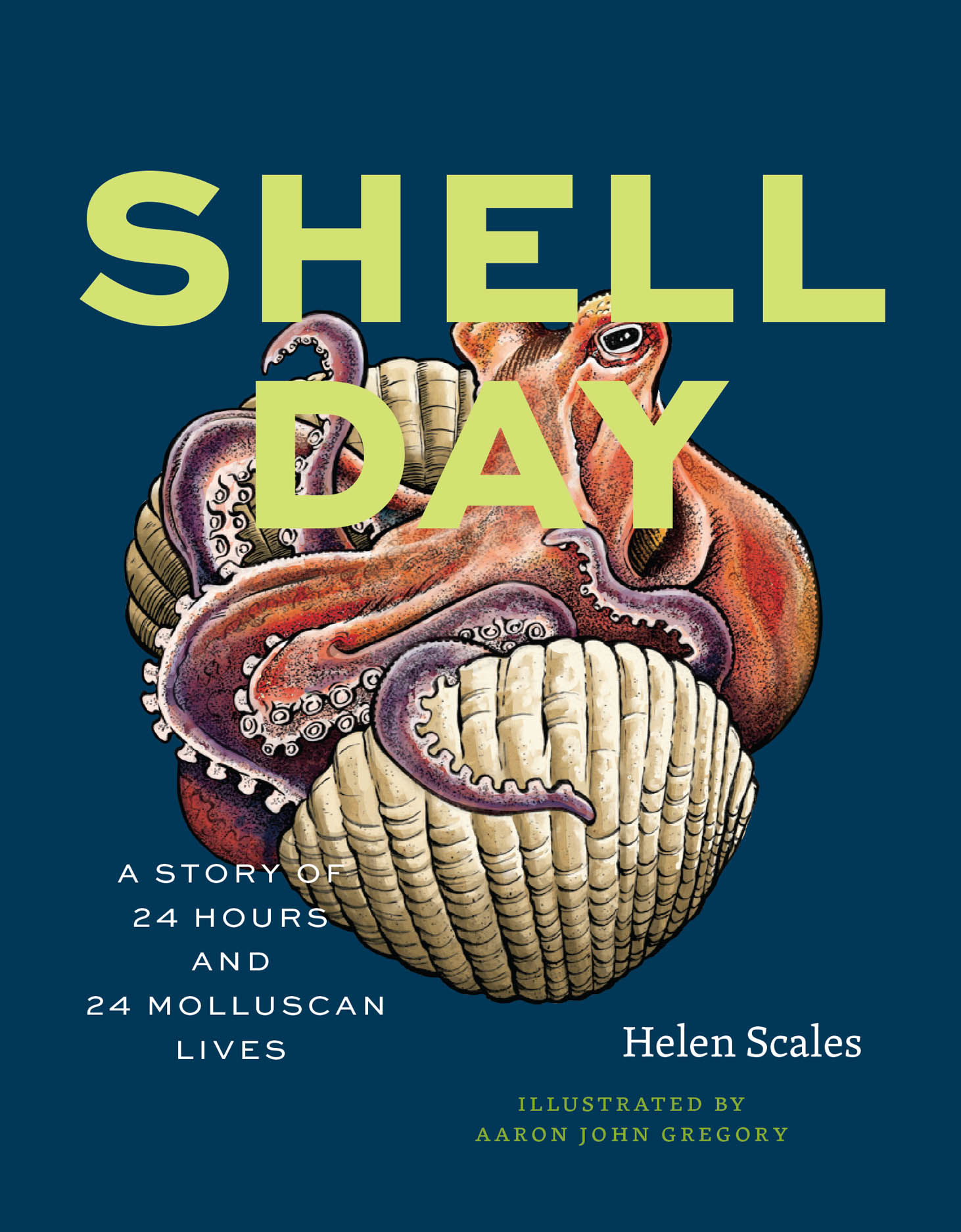
Far in the north, the Svalbard archipelago lies deep in the darkness of the polar night. And yet, in what remains a scientific mystery, Iceland scallops continue their daily rhythms, closing and opening their fan-shaped shells using an internal clock. At noon, we observe a clam shell sitting still on the seabed of a sandy tropical lagoon. The two shells open slightly, and a pair of rounded eyes peep out. A small, rust-colored coconut octopus hiding inside lets the clam shells fall apart and gathers them up in her arms. This mollusk’s ancestors long ago lost the ability to produce their own shells, but the cephalopod is happy to use another animal’s castoff as a temporary home. At ten that night, we find ourselves in Southern France. A male moon snail uses his huge, fleshy foot like a plow as he digs down into the seabed in search of food. When the moon snail finds a cockle, he swiftly smothers it, then sets about drilling, aided by a daub of acidic slime. Cockles are tasty, but so are other moon snails, and his snacking has a cannibalistic flavor.
For each chapter, illustrator and cartoonist Aaron John Gregory has depicted molluscan scenes with entrancing pen-and-ink drawings. Working together to narrate and illustrate these unique moments in time, Scales and Gregory have created an engaging read that is a perfect way to spend an hour or two—and a true gift for beachcombers, naturalists, or anyone eager to learn about the mollusks that make their favorite shells.
From morning to night and from the Arctic to the equator, snails, clams, and other shell-making mollusks have busy days. In this short book, acclaimed author and marine biologist Helen Scales shows readers exactly how these animals spend their time. Each chapter of Shell Day features a single mollusk during a single hour, highlighting twenty-four different species.
Far in the north, the Svalbard archipelago lies deep in the darkness of the polar night. And yet, in what remains a scientific mystery, Iceland scallops continue their daily rhythms, closing and opening their fan-shaped shells using an internal clock. At noon, we observe a clam shell sitting still on the seabed of a sandy tropical lagoon. The two shells open slightly, and a pair of rounded eyes peep out. A small, rust-colored coconut octopus hiding inside lets the clam shells fall apart and gathers them up in her arms. This mollusk’s ancestors long ago lost the ability to produce their own shells, but the cephalopod is happy to use another animal’s castoff as a temporary home. At ten that night, we find ourselves in Southern France. A male moon snail uses his huge, fleshy foot like a plow as he digs down into the seabed in search of food. When the moon snail finds a cockle, he swiftly smothers it, then sets about drilling, aided by a daub of acidic slime. Cockles are tasty, but so are other moon snails, and his snacking has a cannibalistic flavor.
For each chapter, illustrator and cartoonist Aaron John Gregory has depicted molluscan scenes with entrancing pen-and-ink drawings. Working together to narrate and illustrate these unique moments in time, Scales and Gregory have created an engaging read that is a perfect way to spend an hour or two—and a true gift for beachcombers, naturalists, or anyone eager to learn about the mollusks that make their favorite shells.
208 pages | 25 halftones | 4 3/4 x 6 | © 2026
Biological Sciences: Behavioral Biology, Conservation, Natural History
Reviews

Table of Contents
Preface
Artist’s Note
Midnight Garter Cone Snail (West Africa)
1 AM Jenner’s Cowrie (South America)
2 AM—Low Tide Common Limpet (Europe)
3 AM Iceland Scallop (Arctic)
4 AM Humboldt Squid (Eastern Pacific)
5 AM Bobtail Squid (Hawaiian Islands)
6 AM Chambered Nautilus (Western Pacific)
7 AM Wavy-Rayed Lampmussel (North America)
8 AM—High Tide Dog Whelk (Northern Europe)
9 AM Giant Clam (Southeast Asia)
10 AM Button Top Shell (Singapore)
11 AM Caribbean Hermit Crab (Caribbean Sea)
Noon Coconut Octopus (Red Sea)
1 PM Deep-Sea Hydrothermal Vent Mussel (East Pacific)
2 PM—Low Tide Spire Snail (Europe)
3 PM Argonaut (Indian Ocean)
4 PM Sea Butterfly (Southern Ocean)
5 PM Nutmeg Snail (Eastern Pacific)
6 PM Giant Cuttlefish (Southern Australia)
7 PM Polynesian Tree Snail (South Pacific)
8 PM—High Tide Pacific Abalone (Japan)
9 PM Queen Conch (Caribbean Sea)
10 PM Moon Snail (Mediterranean)
11 PM Giant Triton (Australia)
Epilogue
Acknowledgments
Further Reading
Index
Artist’s Note
Midnight Garter Cone Snail (West Africa)
1 AM Jenner’s Cowrie (South America)
2 AM—Low Tide Common Limpet (Europe)
3 AM Iceland Scallop (Arctic)
4 AM Humboldt Squid (Eastern Pacific)
5 AM Bobtail Squid (Hawaiian Islands)
6 AM Chambered Nautilus (Western Pacific)
7 AM Wavy-Rayed Lampmussel (North America)
8 AM—High Tide Dog Whelk (Northern Europe)
9 AM Giant Clam (Southeast Asia)
10 AM Button Top Shell (Singapore)
11 AM Caribbean Hermit Crab (Caribbean Sea)
Noon Coconut Octopus (Red Sea)
1 PM Deep-Sea Hydrothermal Vent Mussel (East Pacific)
2 PM—Low Tide Spire Snail (Europe)
3 PM Argonaut (Indian Ocean)
4 PM Sea Butterfly (Southern Ocean)
5 PM Nutmeg Snail (Eastern Pacific)
6 PM Giant Cuttlefish (Southern Australia)
7 PM Polynesian Tree Snail (South Pacific)
8 PM—High Tide Pacific Abalone (Japan)
9 PM Queen Conch (Caribbean Sea)
10 PM Moon Snail (Mediterranean)
11 PM Giant Triton (Australia)
Epilogue
Acknowledgments
Further Reading
Index