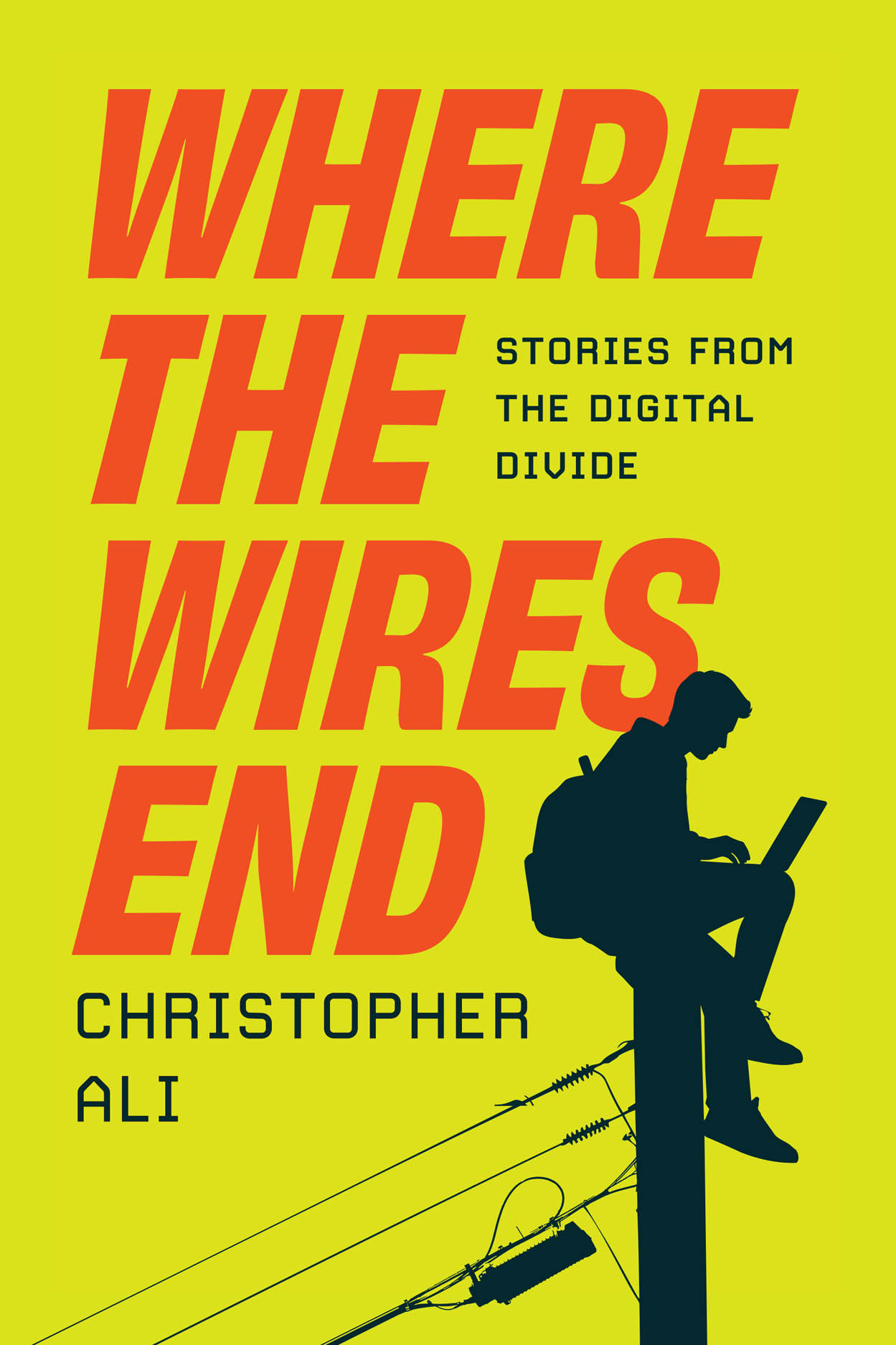
Where the Wires End
Stories from the Digital Divide
Where the Wires End
Stories from the Digital Divide
The stories of those without access to broadband services—and an urgent call for their connection.
The average American will spend years of their lives online. For many, the Internet is life, facilitating employment, education, commerce, and connection. But imagine students who only have online access in the early hours of the morning, when the sun is down, and the Internet traffic is low. Imagine living through a pandemic without Internet access because you can’t afford the monthly subscription. Imagine a first responder unable to find a strong enough signal to seek life-saving services. In this eye-opening book, communications scholar Christopher Ali shares such stories—and calls for policymakers, broadband companies, and governments to connect these communities with meaningful, affordable broadband.
It may seem unthinkable that tens of millions of people across the country are unable to access the Internet because of a lack of infrastructure; a computer; affordable broadband subscription options; or training, support, and skills. These people, some who are still using dial-up connections, are part of what is often called “the digital divide.” Where the Wires End brings them into the broadband policy conversation, incorporating interviews, surveys, focus groups, and field visits with individuals, communities, and organizations across the country, from inner-city Pittsburgh to the Hoopa Valley Indian Reservation in California. Ali focuses on the stories of those without access to broadband and those who work to get them attention and connection. He then links these stories to ongoing policy issues, demonstrating how we all benefit from a more empathetic approach to broadband policy that is digitally equitable, inclusive, and ultimately, more successful.
Reviews

Table of Contents
Prologue: An Ode to Tuna
Introduction: Where the Wires End the Stories Begin
1. Context: That One-Bar Problem
2. Infrastructure: What’s Your Broadband Story?
3. Affordability: Modern-Day Heroes
4. Outreach: Meeting People Where They Are
5. Safety: Mayday
Conclusion: From Empathy to Equity
Epilogue: Method and Methodology: Or How I Did What I Did
Acknowledgments
Notes
Bibliography
Index