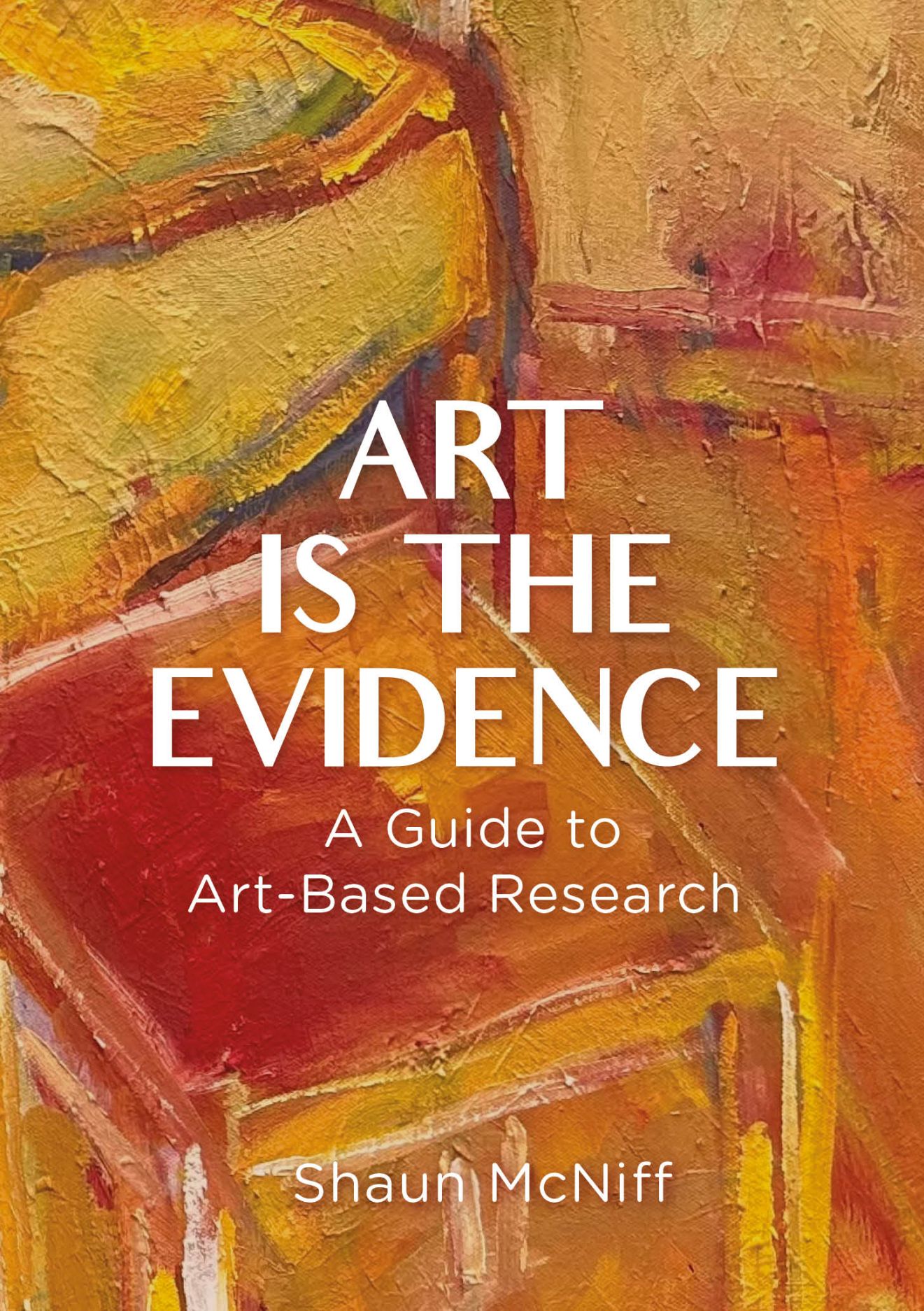
A practical guide to art-based research.
Art-based research uses artmaking as a primary mode of inquiry and presents art as evidence. While sharing many qualities with scientific inquiry, it is distinguished by the unique character and personal dimensions of each artwork. Artistic intelligence is a gestating, unpredictable, and often challenging crucible of creation that furthers discovery ahead of conscious thought. Rather than treating art as data to be analyzed by social science procedures, this guide lets art speak for itself, offering empirical evidence of artmaking’s contributions to human understanding.
Art Is the Evidence emphasizes how methods emerge, sometimes unplanned, from the art-based research process rather than from following fixed and preexisting institutionally approved methods. The book explores how to work creatively within prescribed structures and embrace tensions with them as sources of artistic transformation. It explores the role of video and digital media in generating convincing art evidence, universal accessibility involving trained and untrained artists, and the future importance of natural art experiments happening throughout the world beyond academic and professional settings.


Table of Contents
List of Figures
Acknowledgments
Preface: To Research Through the Making of Art
1. Foundations and Guiding Principles
Original premise and paradigm clarity
Defining art-based research
Institutional challenges
Free movement of ideas and research
2. Personal and Empirical: A Pervasive Misunderstanding
Embracing and transcending the personal
3. A Natural Emanation from Practice
Formative processes—Liberating artistic interpretation
Learning by not doing: A paradoxical realization
Completing a natural art experiment 50 years later
Art Alchemies
Personal artistic expression can advance professional understanding
Firsthand experimentation with methods of practice
Plans and the “nature” of artistic intelligence
4. Art Is the Evidence: Persons, Process, and Creations
An evidentiary epiphany
Clear and convincing: Artistic quality matters
Engaging art’s unique presence and expression versus data analysis
5. Doing Art-Based Research in Academic Settings
One person’s perspective
Working within limits and prescribed formats
Breadth of artistic possibilities
Freedom of inquiry
6. Research Structure: Simpler the Deeper
Concise, jargon free, and natural writing
Literature and citing
Abstracting and distilling
Proposals
Questions and methods
Presentation of the research and outcomes
7. Innovations Shaped by Experimentation
Solo and reciprocal inquiry with others
Artistic reflection in response to the research
Video and new media
The integral relationship of form, content, and process
8. Looking to the Future
Who can do art-based research?
Natural art experiments emerging through practice
“No rules” and the art–science relationship revisited
In closing
References
Index