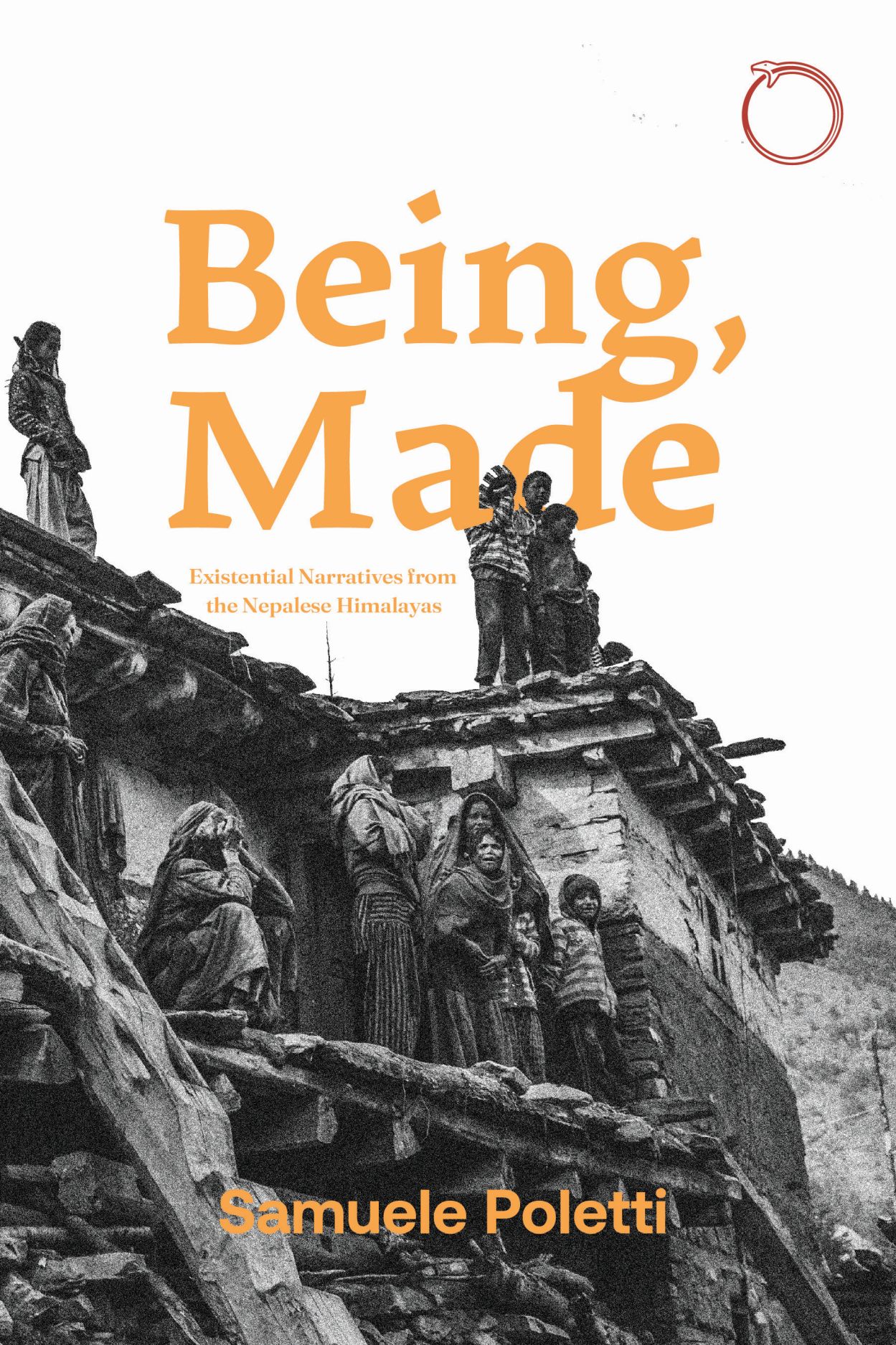
A unique ethnography of Sinja, a rural valley in northwest Nepal, and the cross-cultural ramifications of personhood in South Asia.
Based on more than a decade of research, Being, Made is an exploration of how personhood is articulated among Hindus in Sinja, and how this is being transformed by the growing presence of Pentecostal Christianity. The book illustrates the interpretive efforts of several characters to make sense of their lives, or of particular events that have left a mark on them, and in doing so, it highlights the specific narratives that inform these life stories, giving shape to corresponding subjects. By foregrounding the underpinnings of how one becomes a certain kind of person in Sinja, Being, Made raises questions about the narrative construction of the self, its permeability to external forces—be they social expectations or invisible entities such as gods, demons, or the spirits of the dead—and the crumbling of self-making efforts under the weight of adverse circumstances.
The argument presented moves the understanding of personhood in South Asia beyond its traditional focus on abstract tropes of “dividualism” to delve deeper into the actual ways in which both Hindus and Christians in Sinja become who they are and experience the world around them. Theoretically, Being, Made engages with current debates on intersubjectivity, offering a thorough account of how specific subjects emerge, and, sometimes, dissolve within broader networks of meaning and relations, outlining the basis for conceptualizing subjectivity in open-ended terms—that is, not as a preconceived notion that is universally applicable, but as a by-product of specific circumstances that are constantly negotiated in light of different hermeneutic devices.
The argument presented moves the understanding of personhood in South Asia beyond its traditional focus on abstract tropes of “dividualism” to delve deeper into the actual ways in which both Hindus and Christians in Sinja become who they are and experience the world around them. Theoretically, Being, Made engages with current debates on intersubjectivity, offering a thorough account of how specific subjects emerge, and, sometimes, dissolve within broader networks of meaning and relations, outlining the basis for conceptualizing subjectivity in open-ended terms—that is, not as a preconceived notion that is universally applicable, but as a by-product of specific circumstances that are constantly negotiated in light of different hermeneutic devices.
280 pages | 43 halftones, 1 map | 6 x 9 | © 2026
Anthropology: Cultural and Social Anthropology
Psychology: Social Psychology
Religion: Religion and Society