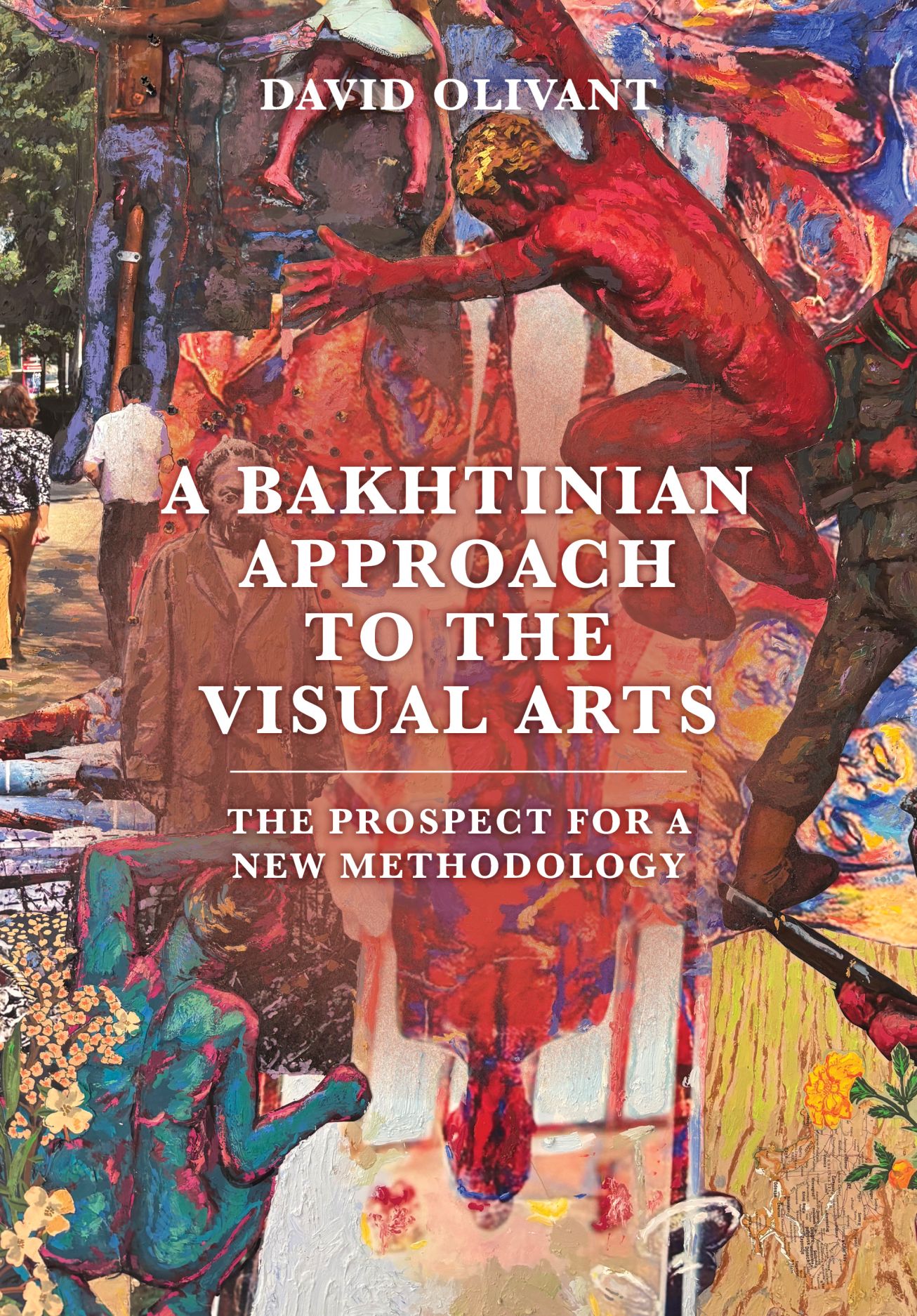
Distributed for Intellect Ltd
A Bakhtinian Approach to the Visual Arts
The Prospect for a New Methodology
A critical study applying Mikhail Bakhtin’s theories to the study of visual art.
This work is the first to propose a cohesive methodology for applying Russian philosopher and literary critic Mikhail Bakhtin’s thought to visual art. David Olivant draws on intermediary frameworks developed by Susanne Langer, Norman Bryson, Lev Vygotsky, Pavel Florensky, Philip Rawson, Michael Baxandall, and Gilles Deleuze. Bakhtin’s philosophical and linguistic insights are examined in relation to works by Giotto, Tilman Riemenschneider, Diego Velázquez, Paul Cézanne, Pablo Picasso, Robert Rauschenberg, Marlene Dumas, Lee Bontecou, Anthony Caro, and Adrian Ghenie.

Reviews

Table of Contents
List of Figures
Abbreviations
Introduction
PART I: How The Formulation of an Answerable Aesthetics Can Be Applied to Evaluating and Understanding Existing Works of Visual Art
1 Architectonics and Once-Occurrent Being
2 Outward Appearance – a Segue into Visual Art
3 Interpersonal Architectonics as the Foundation for Ethics and Aesthetics
4 My Task, Your Task
5 The Hero in Art - Examples of Bakhtin’s Architectonics and Author-Hero Relations in Visual Art
6 Heroes beyond the Human (1) Metaphorical Heroes
7 Dostoevsky – Pictorial Paradigm or Problem
8 A Possible Paradigm of the Dostoevskian Artist - Tilman
9 Dostoevsky and Aleatory Process
10 Speech Genres and Chronotopes
PART II: Bakhtin’s Metalinguistic Theories and General Problems of Transposability to the Visual Arts
11 Introduction
12 Units of Meaning Versus Units of Grammar - Towards a Typology of Style/Genres in Visual Art
13 Thinking in Words or Images
14 Synthetic Cubism
15 Post Cubism
Afterword: A Consummation Devoutly to be Wished or Dreaded
Possible Opportunities for Further Research
Endnotes
Bibliography
Index