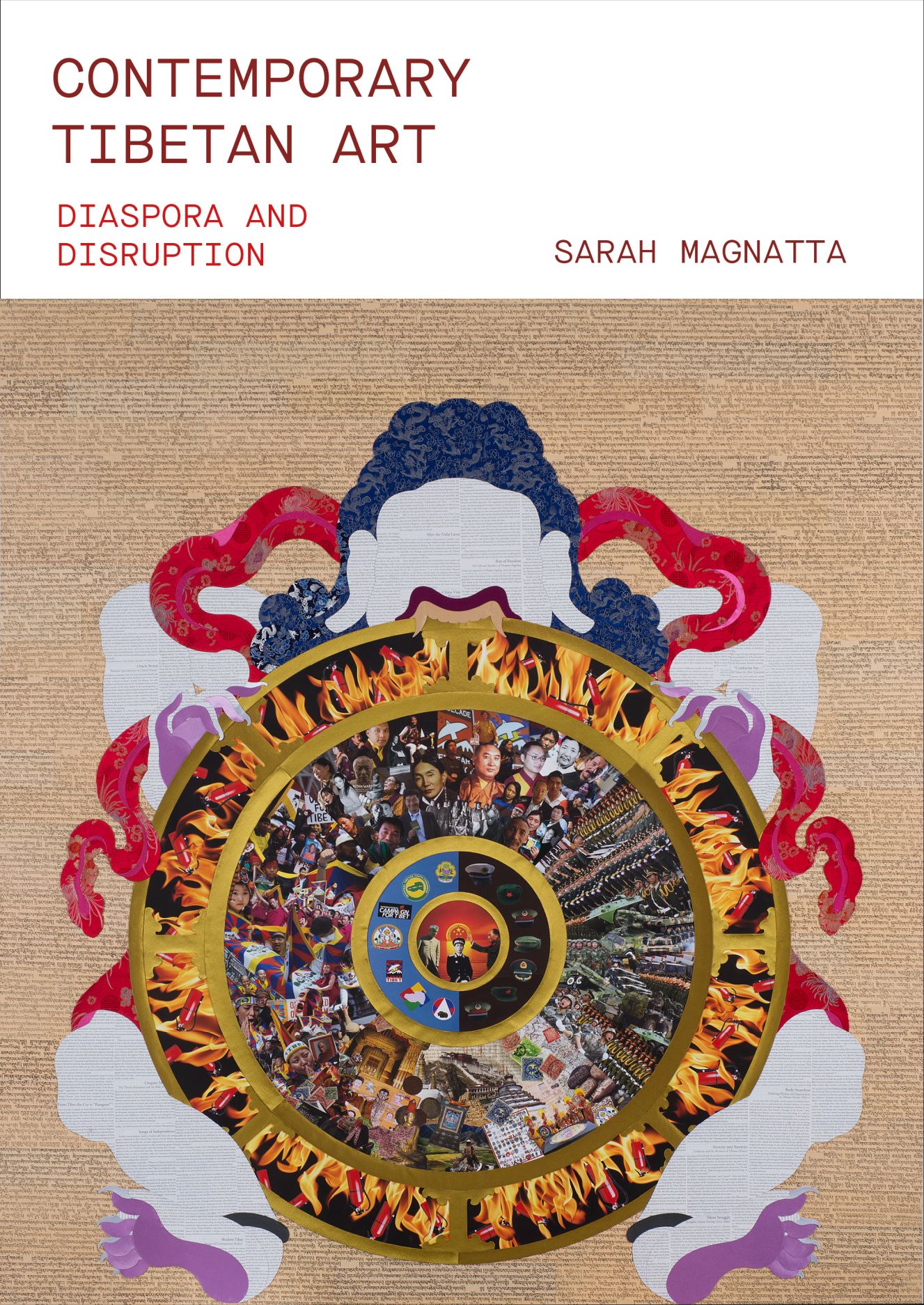
This volume offers one of the first sustained art-historical studies of contemporary Tibetan artists working across global diasporic contexts.
Bringing together close visual analysis, exhibition histories, curatorial perspectives, and artists’ own reflections, the book examines how Tibetan artists have negotiated and transformed the cultural, political, and aesthetic frameworks through which “Tibetan art” has long been understood.
Focusing on artists including Gonkar Gyatso, Karma Phuntsok, Tsherin Sherpa, Tenzing Rigdol, Kesang Lamdark, Sonam Dolma Brauen and emerging practitioners, the book explores how contemporary Tibetan artists engage questions of displacement, identity, materiality, memory, spirituality, and political representation through painting, installation, sculpture, and multimedia practice. Across analyses of disrupted Buddhist iconography, fragmented imagery, experimental materialities, and exhibition practices, the study demonstrates how these artists challenge fixed distinctions between “traditional” and “contemporary” Tibetan culture while negotiating complex relationships of continuity, rupture, and diasporic belonging.
Positioning contemporary Tibetan art within broader histories of global contemporary art, museum display, and visual politics, the book argues that Tibetan artists should not be confined to ethnographic, spiritualised, or regional frameworks alone. Instead, their work participates directly in international conversations surrounding conceptual art, migration, diaspora, material experimentation, institutional critique, and the politics of visibility, making visible Tibetan belonging within contemporary art history and global visual culture.
At the same time, the study examines the exhibitions, museums, biennials, and curatorial structures that have shaped the reception of contemporary Tibetan art over the past several decades. In doing so, it reveals how artists navigate the expectations often placed upon Tibetan cultural production while simultaneously expanding the possibilities of how Tibetan identity, history, and artistic practice can be represented within contemporary art discourse.