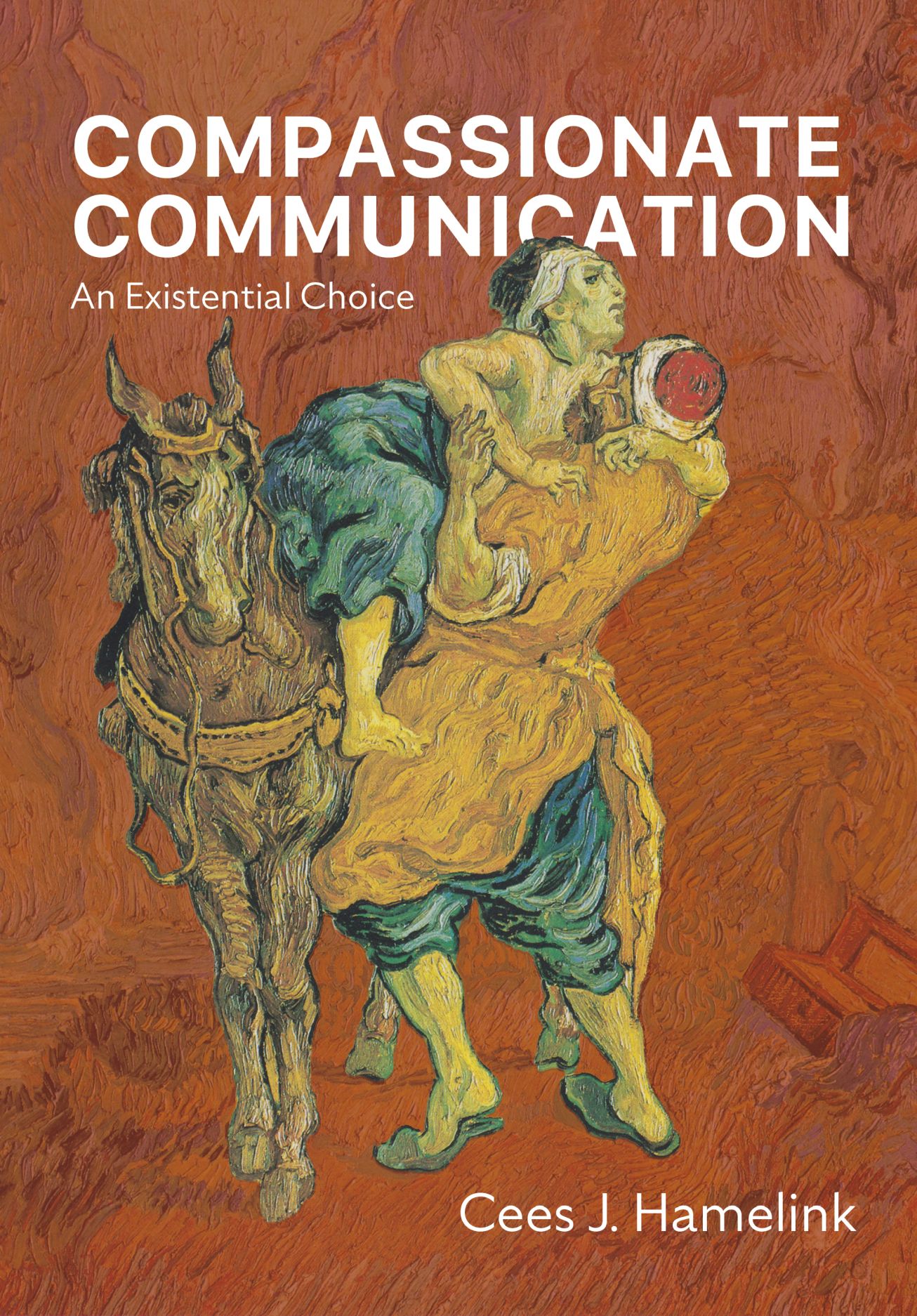
Compassionate Communication: An Existential Choice explores how human beings communicate with one another and asks what moral principles should guide that communication in an increasingly divided world.
Cees J. Hamelink examines the interaction between three basic human capacities: the capacity to care, the capacity to communicate, and the capacity to choose. Drawing on communication studies, philosophy, history, human rights scholarship, and social thought, he argues that communication is not simply the exchange of information but a fundamentally ethical practice shaped by the choices people make in their relationships with others. From this perspective, communication becomes an existential choice between compassion and hostility. While recognizing that conflict, disagreement, and difference are enduring features of human life, the author proposes that individuals and societies retain the ability to choose forms of communication grounded in care, responsibility, and coexistence.
Central to the discussion is the concept of compassionate communication, developed as a framework for understanding how people might communicate in ways that support human flourishing rather than exclusion, division, and antagonism. The book explores the historical, social, political, and cultural forces that shape communicative behavior, examining why hostile forms of communication often gain influence and how they affect relationships between individuals, communities, and societies.
Throughout, Hamelink reflects on contemporary challenges including political polarization, social conflict, media practices, technological change, and public discourse. These discussions are situated within broader historical and philosophical traditions, drawing on thinkers such as Hannah Arendt, Emmanuel Levinas, Ivan Illich, Paulo Freire, and Hans Küng. The result is an interdisciplinary exploration of communication as a moral act and of compassion as a possible foundation for communicative responsibility.
Written in an accessible style, Compassionate Communication will be of interest to students, researchers, and teachers in communication and media studies, communication ethics, political communication, philosophy, journalism, cultural studies, and human rights. It will also appeal to policymakers, journalists, educators, ethicists, religious leaders, and general readers interested in the challenges of living together in diverse and interconnected societies. Suitable for advanced undergraduate and postgraduate study, the book offers a thought-provoking contribution to contemporary debates about communication, responsibility, care, and social coexistence.