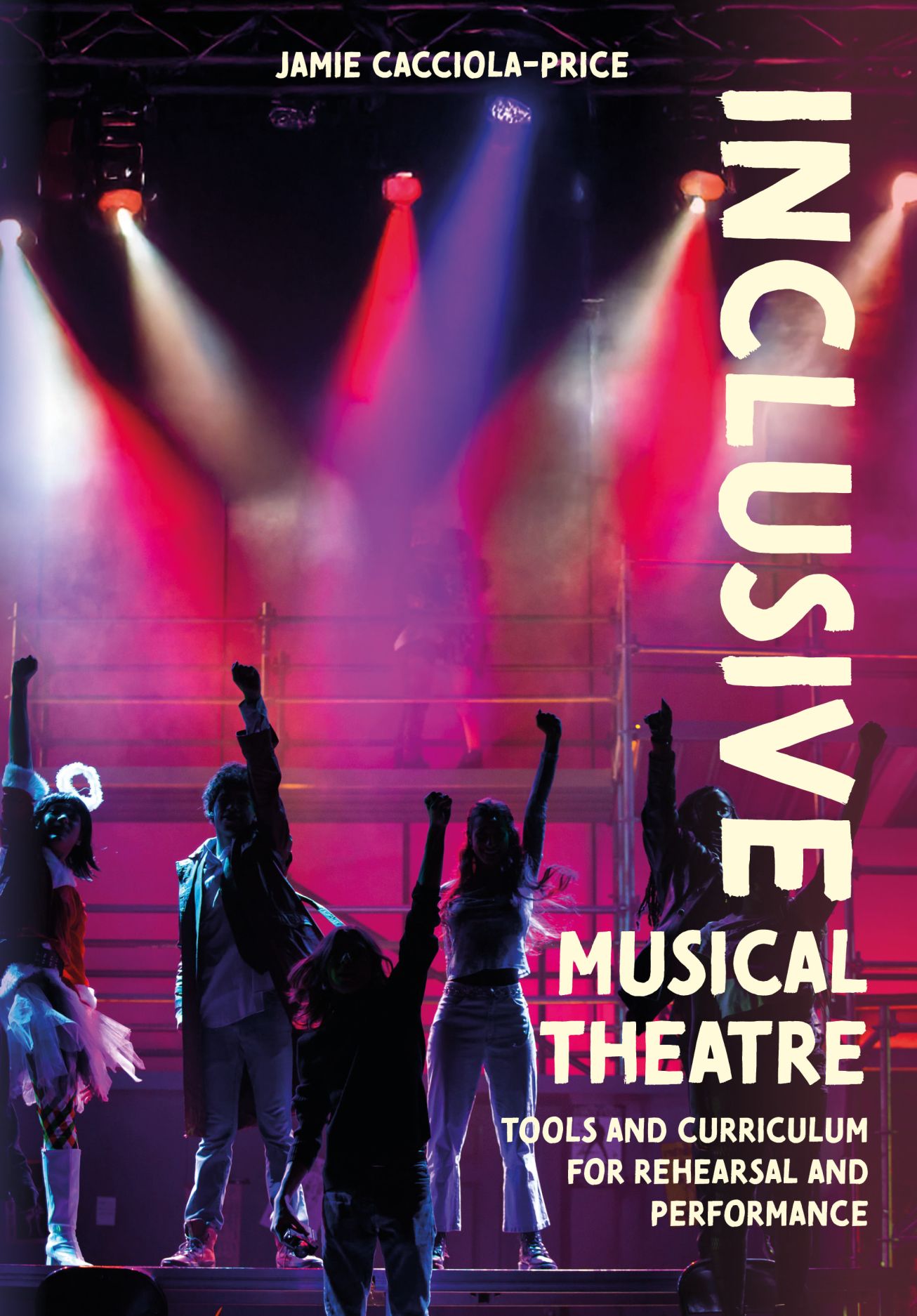
Distributed for Intellect Ltd
Inclusive Musical Theatre
Tools and Curriculum for Rehearsal and Performance
A comprehensive guide to creating inclusive and accessible musical theater at the high school level.
This book is a comprehensive guide that presents a research-backed curriculum and strategies for creating an inclusive and accessible musical theater rehearsal and performance process for high schoolers. It draws on the author’s doctoral research and extensive teaching experience to provide practical tools, assessments, and process modifications to support students of all learning needs and backgrounds.
The book begins by exploring the historical context and legal frameworks surrounding special education in public schools, as well as the intersection of drama education and disability studies. It then delves into an in-depth analysis of traditional actor training methods, highlighting their ableist origins and the need for adaptations to foster radical inclusion.
The core of the text outlines a twenty-nine-week rehearsal and performance curriculum, broken into three distinct phases, that is designed to scaffold skill development, promote ensemble collaboration, and empower diverse learners. Accompanying the unit plans are detailed assignments, assessments, and grading rubrics that align with national and state arts standards. Additionally, the author provides a wealth of supporting documents, such as student contracts, production resources, and a sample warm-up guide.
By championing inclusive practices rooted in the principles of Universal Design for Learning and culturally responsive pedagogy, this book equips drama educators with the tools to create transformative theatrical experiences for all students.


Table of Contents
List of Figures
List of Tables
Acknowledgments
Foreword
Jonathan P. Jones and David T. Montgomery
PART I
Introduction and overview
Prologue
Origins
Who am I, and why am I doing this?
The text and its function
The inclusive curriculum
1. Inclusive Classrooms, Drama in Education, Types of Learners, and Engagement
Students with disabilities and public education: IDEA and 504
Least restrictive environment
Inclusive classrooms
Drama in education + special education + inclusive classrooms
Types of learners
The importance of engagement
2. Actor Training, Ableism, and Adapting
Advanced acting training curriculum
A brief history on realism and modern theatre
Acting methods and ableism
Analysis of actor training curriculum
Adapting process
Conclusion of Part I
PART II
3. The Research
Back to school
Data collection
Interview group
Interview group findings
Musical Theatre Alumni Survey findings
Summary of findings
4. Overview of the Curriculum Design, Its Defined Phases, and Inclusive Components
Overview of national core and state standards for theater and alignment with process tools
New York State learning standards in the arts (theatre)
Defined phases and curriculum design model
Tools and process modifications in each phase
Inclusive classroom intersecting inclusive musical theatre curriculum
The course versus the extracurricular
5. Preproduction Phase
Preproduction: Show selection, design, concepts, and budget
Show selection (14 months prior to opening night)
Auditions/casting: Virtual, in-person, sides, and scoring
Student leaders
Dance, vocal, and acting captains
Stage managers
Assistant directors
Preproduction paperwork
Student and parent contracts
Rehearsal calendars (backwards by design)
Before first rehearsal
Preproduction summary
Preproduction checklist
6. Unit Plans
Inclusive musical theatre rehearsal and performance process unit plans
Phase 1 unit plan: Initial learning
Phase 2 unit plan: Review and run-throughs
Phase 3 unit plan: Tech and performance
7. Assignments, Grading, and Rubrics
Written assignments and rubrics
The actor’s journal
Character analysis and script work evaluation worksheet
Scoring worksheet template
Sample song desired response/scoring worksheet
The actor’s journal rubrics
Actor’s journal check-in rubric
The dramaturg project
Dramaturgy assignment guide and checklist
Monthly self-assessment Google form questions
Post-performance reflection paper
Performance reflection rubric
Grading professionalism and performance rubrics
Rehearsal progress scoring sheet
Performance rubric
Musical theatre audition or solo rubric
Conclusion and additional documents and materials
Epilogue
Additional documents
Public performing arts vs. traditional public high schools
Conclusion
Musical theatre acknowledgement
Musical theatre contract
Musical theatre audition information and video submission guide
Blank blocking map
Sample blocking map/stage write chart with number line
Student learning preference survey: sample pre-production Google form questions
Sample warm-up guide/ritual
Sample warm-up
Bibliography