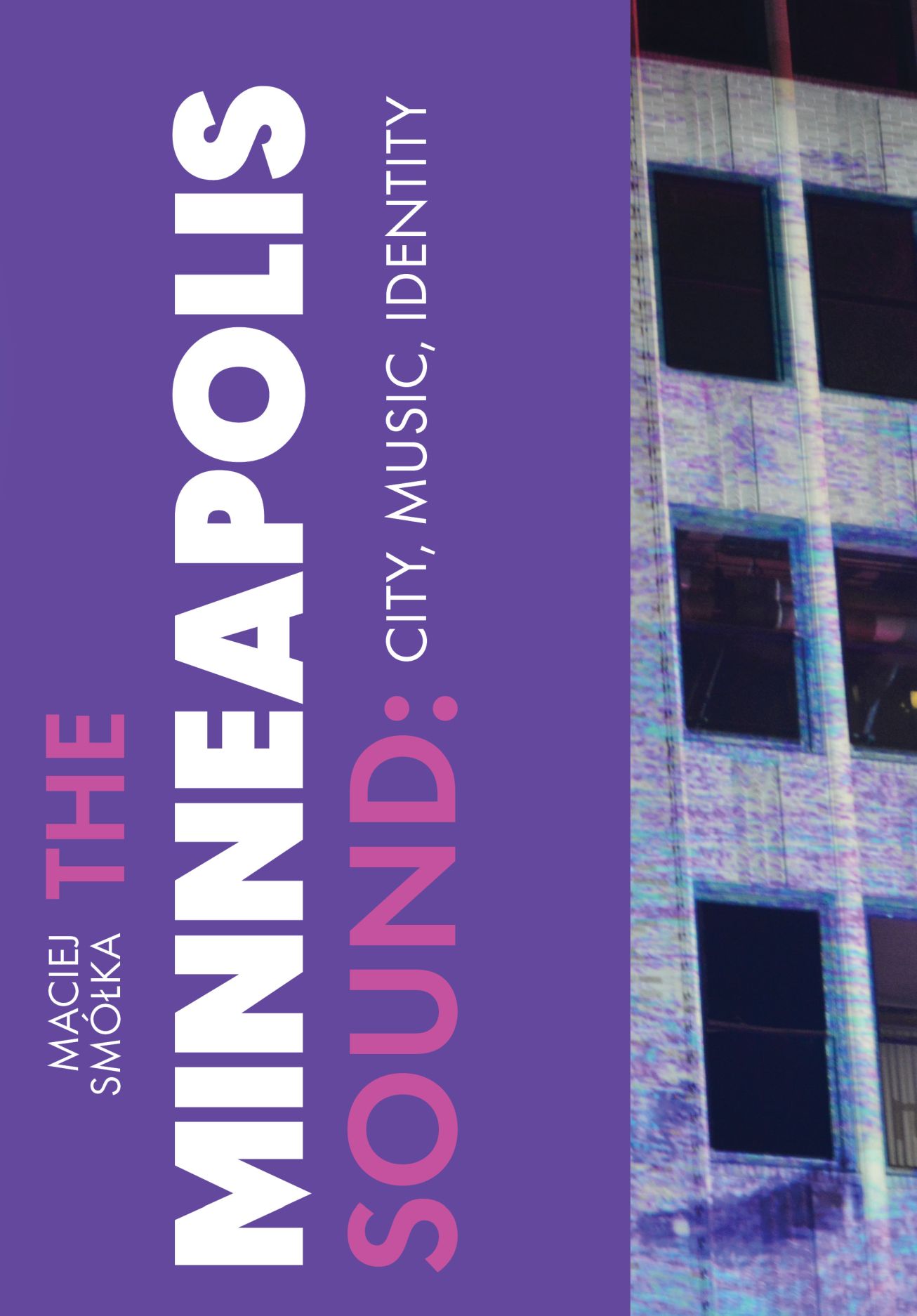
This intimate portrait of Minneapolis music history and the current local scene rethinks what it means for a city to have a “sound.”
The Minneapolis Sound explores how a distinctive musical phenomenon shaped—and was shaped by—the urban, social, and cultural fabric of Minneapolis. Rather than focusing solely on music legend and Minneapolis native Prince and his protégés, the book treats the “Minneapolis Sound” as a cultural phenomenon within which geography, race, memory, and community intersect. Drawing from cultural geography, American studies, and popular music studies, Maciej Smólka analyzes how this locally rooted yet globally recognized sound became a symbol of place, pride, and identity.
Combining critical discourse analysis with five in-depth interviews with key local voices, the study situates the Minneapolis music scene within broader debates on music and place. It traces the city’s history and communities, the evolution of the Sound from its pre-Prince origins to the post-Prince era, and its ongoing cultural resonance in the wake of collective remembrance. Ultimately, the book proposes a new framework for understanding how music functions as a cultural phenomenon: a dynamic web of artistic, social, and spatial practices that continue to define both Minneapolis and its people.


Table of Contents
Acknowledgments
Introduction
The City
Minneapolis and Its History
Minneapolis and Its Communities
Minneapolis and Its Culture
Music
The Prehistory of the Minneapolis Sound: Pre-Prince Era
The Development of the Minneapolis Sound: Pre-Dirty Mind Era
The Evolution of the Minneapolis Sound: Post-Dirty Mind Era
The Late Period of the Minneapolis Sound: Post-1980s Era
The Present Time of the Minneapolis Sound: Post-Prince Era
Identity
Defining the Minneapolis Sound
Ambiguities of the Minneapolis Sound
Race, Otherness, and (Non-)Universal Experience of the Minneapolis Sound
Relationship Between the City and the Minneapolis Sound
Contemporary State of the Minneapolis Sound
Bibliography