9781914983245
9781914983252
A translation of a seminal work by Muhammad Abduh.
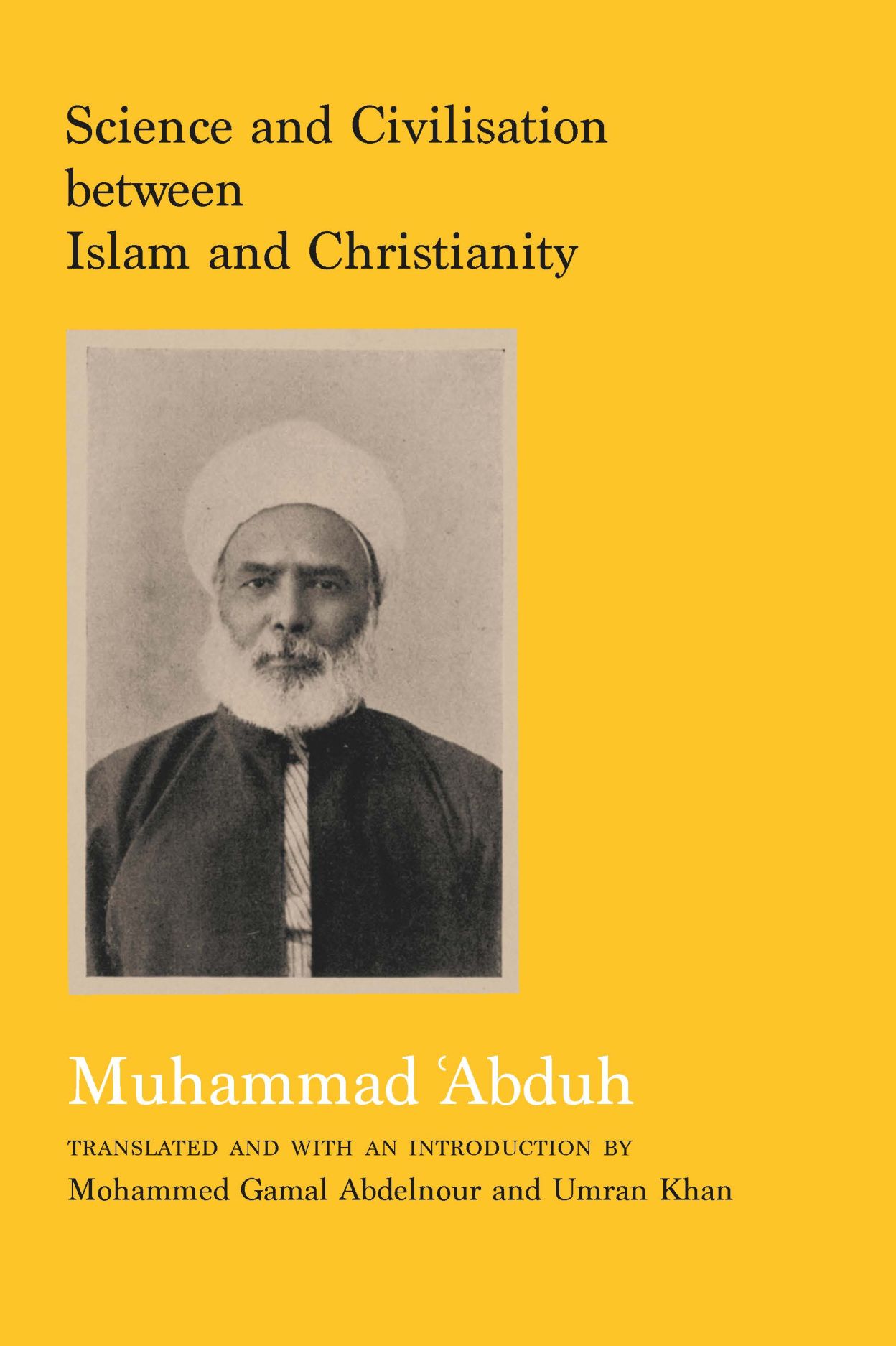
This book is a translation of Muhammad Abduh’s Al-Islam wa-l-Nasraniyya maa al-Ilm wa-l-Madaniyya (Science and Civilization between Islam and Christianity). Abduh was an Egyptian jurist, religious scholar, theologian, and reformer of Al-Azhar—Egypt’s oldest university and a renowned seat of Islamic learning—who died in 1905. His impact on modern Islam cannot be overstated. In fact, much of modern Muslim thought has, in one way or another, been a reaction to his ideas. Although he is the subject of numerous English studies, only one treatise of his has been translated into English: Risalat al-tawhid (Theology of Unity) by Ishaq Masaad and Kenneth Cragg, in 1966.
Far too little attention has been paid to the treatise translated here and its impact on the Islamic theology of Christianity. This first English translation fills a serious gap in the genre of Islam and Christian-Muslim relations.
This book is a translation of Muhammad Abduh’s Al-Islam wa-l-Nasraniyya maa al-Ilm wa-l-Madaniyya (Science and Civilization between Islam and Christianity). Abduh was an Egyptian jurist, religious scholar, theologian, and reformer of Al-Azhar—Egypt’s oldest university and a renowned seat of Islamic learning—who died in 1905. His impact on modern Islam cannot be overstated. In fact, much of modern Muslim thought has, in one way or another, been a reaction to his ideas. Although he is the subject of numerous English studies, only one treatise of his has been translated into English: Risalat al-tawhid (Theology of Unity) by Ishaq Masaad and Kenneth Cragg, in 1966.
Far too little attention has been paid to the treatise translated here and its impact on the Islamic theology of Christianity. This first English translation fills a serious gap in the genre of Islam and Christian-Muslim relations.
192 pages | 6.14 x 9.21 | © 2025

Reviews

Table of Contents
Foreword ix
Preface xi
Acknowledgements xiii
Translators’ Introduction xvii
I Biographical context xvii
II Intellectual content: apology or epistemology? xxii
III A note on the translation xxxi
Islam, Muslims, and Colonialism
in response to Gabriel Hanotaux 1
Semitic and Aryan civilisations 1
Hanotaux on predestination and transcendence 7
Transcendence vs anthropomorphism 12
Addressing Hanotaux’s critique of Muslim realities 20
Islam’s role in governance and society 24
Ottoman–European relations 35
Reflections 40
The Persecution of Knowledge and Civilisation under
Christianity in response to Farah Antun 41
The succinct response 43
The detailed response 45
Denial of inter-fighting between Muslims due to differences
of belief 45
Muslims’ tolerance with scholars, researchers, and philosophers
from all groups 47
Scholars and philosophers who enjoyed the good graces of the
caliphs 48
The Essence of Christianity 53
Introduction 53
The first principle of Christianity: miracles 53
The second principle of Christianity: the authority of the priests 55
The third principle of Christianity: asceticism 55
The fourth principle of Christianity: belief in the incomprehensible 56
The fifth principle of Christianity: that the Holy Scriptures contain
everything which mankind needs to know for this life and
the next 57
The sixth principle of Christianity: demarcating between Christians
and others – including those with similar beliefs 58
The results and effects of these principles 58
Christianity’s opposition to science 61
The surveillance of publications and the Inquisition 63
Christian persecution of Muslims, Jews, and scholars in general 65
Principle of authority for clergymen over the masses 66
Church opposition to hypodermic injections 67
Opposition to painless labour 67
Opposition to civil authority and freedom of belief 67
Opposition to scientific associations and books 68
Protestantism and reform 68
Separation of church and state in Christianity 70
Muslim belief about the Messiah and Christianity 71
The Essence of Islam Towards Science and Philosophy in
Accordance with its Principles 75
Introduction to the first principle 75
The first principle of Islam: rational enquiry to attain faith 79
The second principle of Islam: preference of reason over the apparent
meaning of revelation when there is a contradiction 79
The third principle: a principle of judgement in Islam: avoiding
excommunication 80
The fourth principle of Islam: consideration of God’s universal laws
in creation 80
The fifth principle of Islam: the overthrow of religious authority 82
The sixth principle of Islam: protecting Islam by defensive war to
avoid compulsion in religion 86
The seventh principle of Islam: amicability of opposing beliefs 89
The eighth principle of Islam: combining the interest of this life
and the hereafter 90
Outcomes of these principles and their effects on Muslims 95
Muslim engagement with literary and rational sciences 96
Their engagement with cosmology at the beginning of the second
century 97
Their development of public and private libraries 98
Their development of colleges for sciences and the method of
teaching within them 99
Western sciences and their discoveries 100
Caliphs and rulers taking scholars and scholarly production by
the hand 104
Removing two doubts and explaining the reality of the so-called
persecution 105
Islam today and judging Islam based on Muslims’ conduct 108
Renan’s view on Islam 111
Muslim stagnation and its causes 113
Europe’s Acquisition of Civilisation from Islam and the Reasons
for its General Prominence 135
The first reason: associations 135
The second reason: religious pressure 136
The third reason: revolution 137
The fourth reason: leaving Christianity 137
A return to Islam’s tolerance 138
Knowledge’s dependence on religion and the contagion of bigotry
amongst Muslims 140
Neglect of the statements of the earliest Muslims and the state of the
religious sciences and their students 142
Knowledge’s affiliation with Islam and its disassociation from all
else 144
The callers to Islam 145
The imitator is always below the imitated 146
Reform and reformers 147
The difference between the two types of fanaticism 148
Hanotaux’s recent opinion 148
Policy of the English regarding tolerance 150
Conclusion 151
Bibliography 153
Index 157
Preface xi
Acknowledgements xiii
Translators’ Introduction xvii
I Biographical context xvii
II Intellectual content: apology or epistemology? xxii
III A note on the translation xxxi
Islam, Muslims, and Colonialism
in response to Gabriel Hanotaux 1
Semitic and Aryan civilisations 1
Hanotaux on predestination and transcendence 7
Transcendence vs anthropomorphism 12
Addressing Hanotaux’s critique of Muslim realities 20
Islam’s role in governance and society 24
Ottoman–European relations 35
Reflections 40
The Persecution of Knowledge and Civilisation under
Christianity in response to Farah Antun 41
The succinct response 43
The detailed response 45
Denial of inter-fighting between Muslims due to differences
of belief 45
Muslims’ tolerance with scholars, researchers, and philosophers
from all groups 47
Scholars and philosophers who enjoyed the good graces of the
caliphs 48
The Essence of Christianity 53
Introduction 53
The first principle of Christianity: miracles 53
The second principle of Christianity: the authority of the priests 55
The third principle of Christianity: asceticism 55
The fourth principle of Christianity: belief in the incomprehensible 56
The fifth principle of Christianity: that the Holy Scriptures contain
everything which mankind needs to know for this life and
the next 57
The sixth principle of Christianity: demarcating between Christians
and others – including those with similar beliefs 58
The results and effects of these principles 58
Christianity’s opposition to science 61
The surveillance of publications and the Inquisition 63
Christian persecution of Muslims, Jews, and scholars in general 65
Principle of authority for clergymen over the masses 66
Church opposition to hypodermic injections 67
Opposition to painless labour 67
Opposition to civil authority and freedom of belief 67
Opposition to scientific associations and books 68
Protestantism and reform 68
Separation of church and state in Christianity 70
Muslim belief about the Messiah and Christianity 71
The Essence of Islam Towards Science and Philosophy in
Accordance with its Principles 75
Introduction to the first principle 75
The first principle of Islam: rational enquiry to attain faith 79
The second principle of Islam: preference of reason over the apparent
meaning of revelation when there is a contradiction 79
The third principle: a principle of judgement in Islam: avoiding
excommunication 80
The fourth principle of Islam: consideration of God’s universal laws
in creation 80
The fifth principle of Islam: the overthrow of religious authority 82
The sixth principle of Islam: protecting Islam by defensive war to
avoid compulsion in religion 86
The seventh principle of Islam: amicability of opposing beliefs 89
The eighth principle of Islam: combining the interest of this life
and the hereafter 90
Outcomes of these principles and their effects on Muslims 95
Muslim engagement with literary and rational sciences 96
Their engagement with cosmology at the beginning of the second
century 97
Their development of public and private libraries 98
Their development of colleges for sciences and the method of
teaching within them 99
Western sciences and their discoveries 100
Caliphs and rulers taking scholars and scholarly production by
the hand 104
Removing two doubts and explaining the reality of the so-called
persecution 105
Islam today and judging Islam based on Muslims’ conduct 108
Renan’s view on Islam 111
Muslim stagnation and its causes 113
Europe’s Acquisition of Civilisation from Islam and the Reasons
for its General Prominence 135
The first reason: associations 135
The second reason: religious pressure 136
The third reason: revolution 137
The fourth reason: leaving Christianity 137
A return to Islam’s tolerance 138
Knowledge’s dependence on religion and the contagion of bigotry
amongst Muslims 140
Neglect of the statements of the earliest Muslims and the state of the
religious sciences and their students 142
Knowledge’s affiliation with Islam and its disassociation from all
else 144
The callers to Islam 145
The imitator is always below the imitated 146
Reform and reformers 147
The difference between the two types of fanaticism 148
Hanotaux’s recent opinion 148
Policy of the English regarding tolerance 150
Conclusion 151
Bibliography 153
Index 157