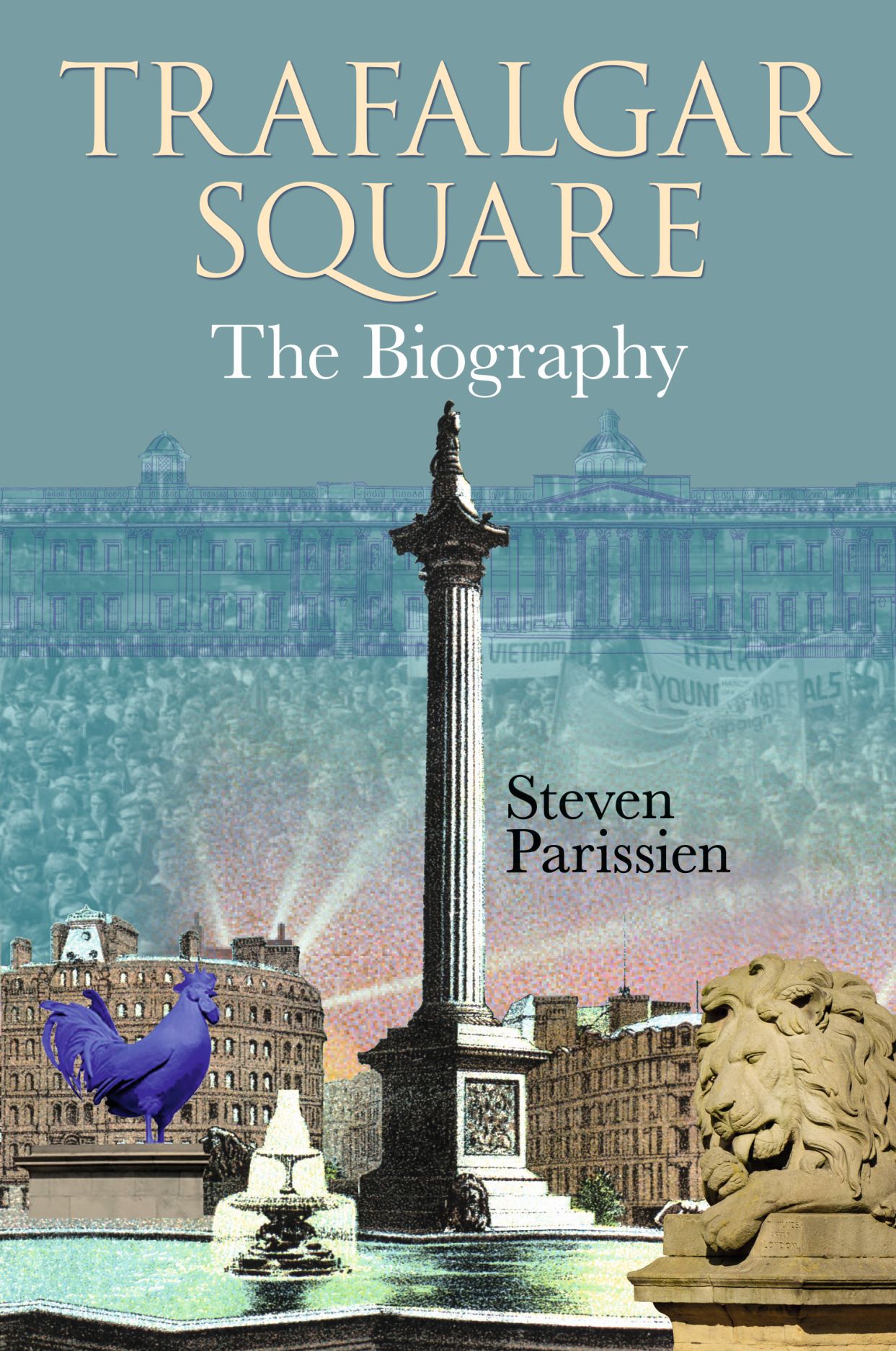
This book explores the origins and achievements of the men and women who have made “Britain’s beating heart” a resonant symbol of art, architecture, and democracy at work.
Home to Nelson’s Column, Landseer’s lions, Lutyens’s fountains, the National Gallery, and St Martin-in-the-Fields, Trafalgar Square has long been defined, cartographically and emotionally, as Britain’s beating heart. This famous landmark has multiple roles: a national showcase; a political soapbox; an architectural and sculptural gallery; and a default venue for national expression. Its stories are rich and varied, from its controversial inception to its transformation in the post-war era as a focus for both celebration and dissent. Trafalgar Square belongs to the people, not to the Crown, and it is not only the nation’s heart, it is also its soul. This book explores contemporary accounts and recent research in social history, architectural history, and human geography to analyze the square’s genesis, development, and maturity. Including archival prints and illustrations, it shows how this space developed over the centuries to the central focus it has now become. Each chapter includes a critical review of the site’s structures and sculptures and covers key architects, artists, patrons, embassies, and protests.
304 pages | 20 color plates, 38 halftones | 6.14 x 9.21 | © 2027
Architecture: British Architecture
History: British and Irish History


Table of Contents
2 King Edward I and the Eleanor Crosses
3 King Charles I and Charing Cross
4 James Gibbs and St Martin-in-the-Fields
5 William Kent and the Royal Mews
6 Horatio Nelson and Trafalgar
7 John Nash and Trafalgar Square
8 King George IV and the National Collection
9 William Wilkins and the National Gallery
10 Charles Barry and the Fountains
11 Railton, Baily and Nelson
12 Lord Stanhope and the National Portrait Gallery
13 Edwin Landseer and the Lions
14 Napier and Havelock, Gordon and Jenner
15 Annie Besant and Bloody Sunday
16 Peter Larkin and Canada House
17 Admiral Cunningham and the North Wall
18 Prince Olav and the Christmas Tree
19 Bertrand Russell and the Aldermaston March
20 Nelson Mandela and South Africa House
21 Margaret Thatcher and the Poll Tax Riots
22 John Mortimer and the Fourth Plinth
23 Epilogue: Trafalgar Square and Film