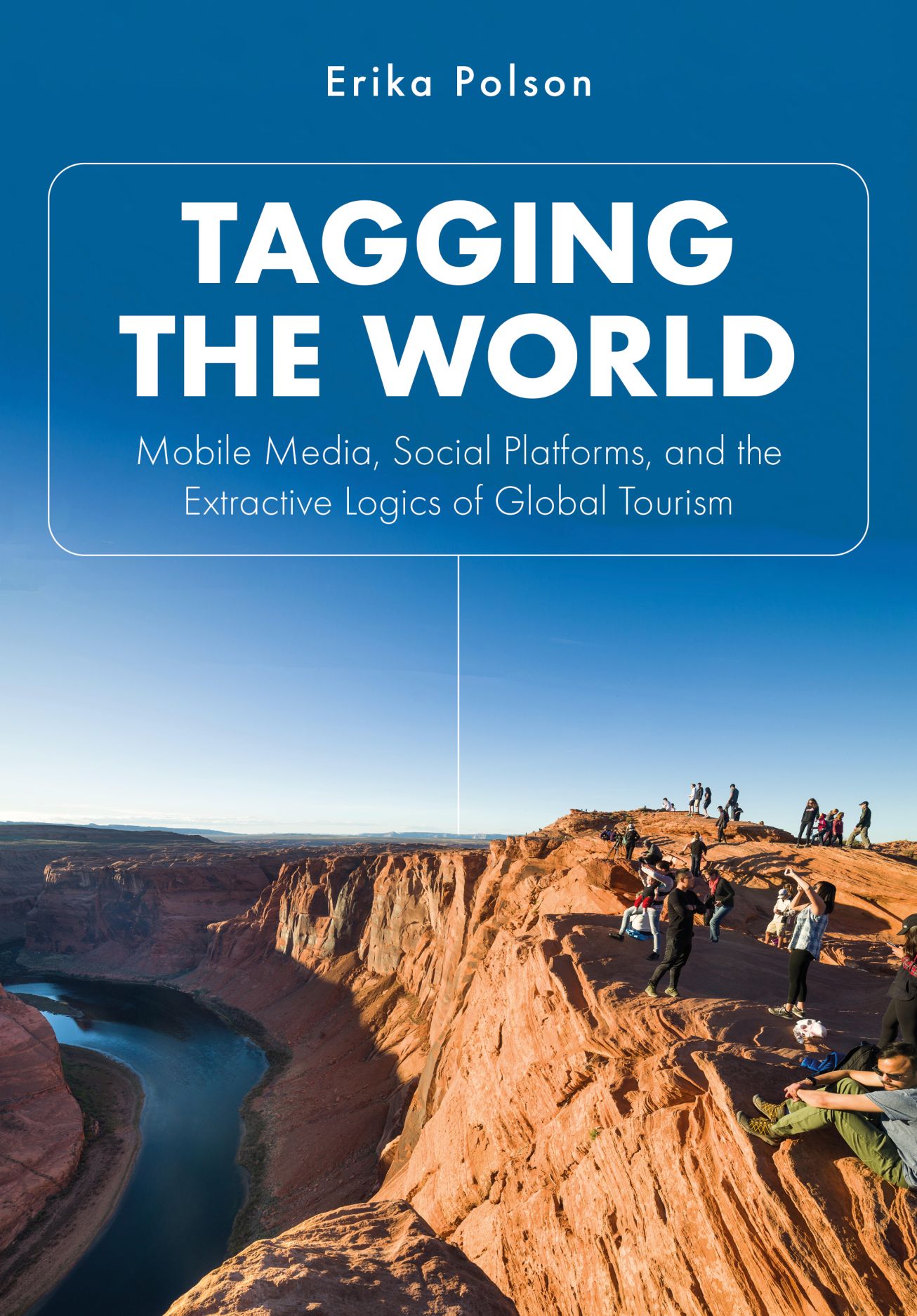
Tagging the World
Mobile Media, Social Platforms, and the Extractive Logics of Global Tourism
Distributed for Intellect Ltd
Tagging the World
Mobile Media, Social Platforms, and the Extractive Logics of Global Tourism
Drawing on phenomena from Airbnb to remote work, Tagging the World examines how mobile media have transformed contemporary travel into a networked system of visibility, value extraction, and spatial commodification.
In a world shaped by Instagram, TikTok, Airbnb, remote work, and digital nomadism, this book explores how travelers increasingly encounter places through platformed practices of tagging, sharing, mapping, rating, and circulation—practices that reshape not only how destinations are represented, but how they are experienced, inhabited, and economically transformed. Drawing on ethnographic research, digital culture analysis, mobility studies, and media theory, it investigates the complex relationships among travelers, mobile media systems, and the places they move through. Through discussions of travelgramming, digital nomadism, virtual tourism, authenticity, and the platforming of “the local,” Tagging the World argues that contemporary travel operates through an emerging “extraction economy” in which experiences, locations, atmospheres, and identities become resources for visibility, accumulation, and platform value creation.
Rather than reducing tourism to technological determinism or moral critique, the study foregrounds the ambivalent pressures shaping contemporary mobile life. It examines how travelers pursue mobility as a form of aspiration, self-construction, and meaning-making even as their networked practices contribute to processes of commodification, displacement, environmental strain, and uneven power relations. In doing so, it demonstrates how practices of digital place-making can easily slide into forms of place-taking, where locations become transformed into consumable objects within global circuits of attention.
At the same time, the book shows how places themselves actively shape digital media practices, influencing how mobility, presence, authenticity, and sociality are performed and understood within platform culture. Combining essayistic prose, ethnographic attention, and structural analysis, Tagging the World moves fluidly between everyday travel practices and the broader infrastructures of platform capitalism that organize them.
Timely, accessible, and conceptually innovative, Erika Polson’s new book makes a major contribution to media and communication studies, digital geography, mobility studies, tourism studies, and digital anthropology. The book will be essential reading for scholars, students, and readers interested in the changing relationship between travel, technology, identity, and place in the platform age.