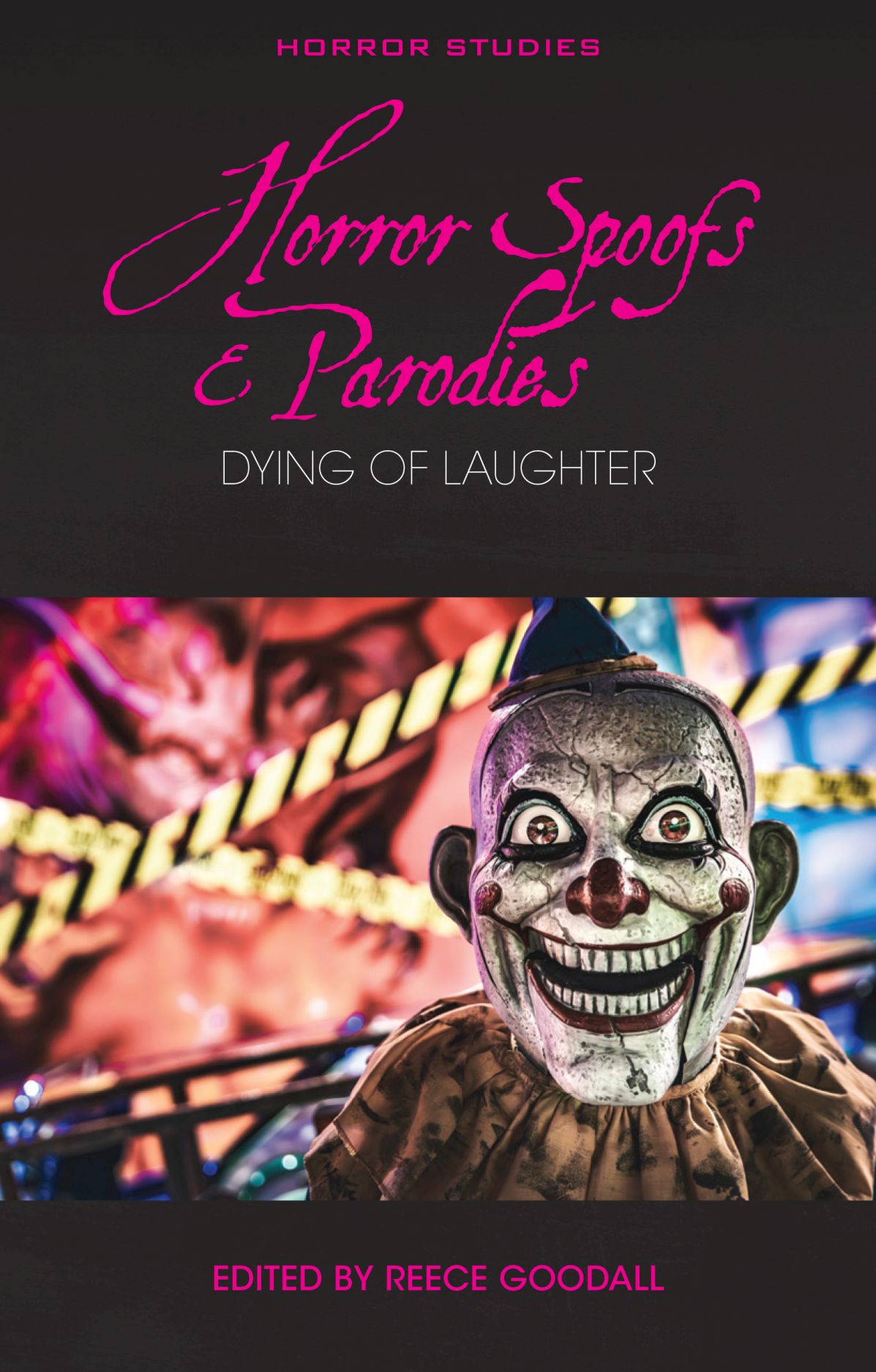
This edited collection explores the world of the horror parody.
Horror Spoofs and Parodies examines how people take the works that make us scream and transform them into ones that make us laugh. It explores famous parodies such as the Abbott and Costello Meet… films, Young Frankenstein, and Scary Movie, as well as lesser-known works such as Psycho Beach Party and Student Bodies, to see how they make the scary funny. This book takes us around the world to see horror parody in Brazil, Cuba, China, and Turkey, and moves us beyond the silver screen to unpack horror parodies in video games, board games, and web videos.


Table of Contents
Processes of Parodisation
‘Dying of Laughter: Fusing Fear and Fun’ – Reece Goodall
‘First as Fear, Then as Farce: Horror Film Sequels, Surfaces, and Serialized Silliness’ – David Scott Diffrient
‘Scarily Bad Acting: Perceptions of Performance within the Scary Movie Franchise’ – Abigail Whittall
Genres and Spoof Phases
‘Let’s Get That R-Rating: Student Bodies and Early Horror Parodies’ – Samantha Janes
‘Queering and Historicizing Psycho Beach Party’ – Jeremy Freeman
‘‘Who shoots their vacation videos in 3D?’: Parodying the Inescapability of Convention in Found Footage 3D’ – Heather Roberts
Global Spoofs and Parodies
‘Night of the Imperialist Living Dead in Socialist Cuba: the Case of Juan of the Dead’ – András Lénárt
‘Hopping Corpses and Fanged Laughter: Parodying the Vampire Genre in Mr. Vampire Films’ – Diganta Roy
‘From Global Movies to Glocal Parodies: Spoofing the Horror in Turkish Cinema’ – Orhan Sezgin
‘Killer Codfishes and Tramp Monsters: Spoofy Horror Rip-offs in Brazilian Popular Cinema’ – Laura Cánepa, Rogerio Ferraraz and Tiago Monteiro
The Media of Horror and Spoof Humour
‘Nintendo’s Lark in the Dark: A Humour Theory Analysis of Luigi’s Mansion’ – Matthew McKeague
‘‘What my thumbs knew’: phenomenology and the uncanny digit(al) in The Blair Thumb – Kaitlin Lake
‘Playing with Horror: How Tim Story’s The Blackening Parodies Tabletop Games Than Slasher Flicks’ – Heather Bass
‘Dying of Laughter: Fusing Fear and Fun’ – Reece Goodall
‘First as Fear, Then as Farce: Horror Film Sequels, Surfaces, and Serialized Silliness’ – David Scott Diffrient
‘Scarily Bad Acting: Perceptions of Performance within the Scary Movie Franchise’ – Abigail Whittall
Genres and Spoof Phases
‘Let’s Get That R-Rating: Student Bodies and Early Horror Parodies’ – Samantha Janes
‘Queering and Historicizing Psycho Beach Party’ – Jeremy Freeman
‘‘Who shoots their vacation videos in 3D?’: Parodying the Inescapability of Convention in Found Footage 3D’ – Heather Roberts
Global Spoofs and Parodies
‘Night of the Imperialist Living Dead in Socialist Cuba: the Case of Juan of the Dead’ – András Lénárt
‘Hopping Corpses and Fanged Laughter: Parodying the Vampire Genre in Mr. Vampire Films’ – Diganta Roy
‘From Global Movies to Glocal Parodies: Spoofing the Horror in Turkish Cinema’ – Orhan Sezgin
‘Killer Codfishes and Tramp Monsters: Spoofy Horror Rip-offs in Brazilian Popular Cinema’ – Laura Cánepa, Rogerio Ferraraz and Tiago Monteiro
The Media of Horror and Spoof Humour
‘Nintendo’s Lark in the Dark: A Humour Theory Analysis of Luigi’s Mansion’ – Matthew McKeague
‘‘What my thumbs knew’: phenomenology and the uncanny digit(al) in The Blair Thumb – Kaitlin Lake
‘Playing with Horror: How Tim Story’s The Blackening Parodies Tabletop Games Than Slasher Flicks’ – Heather Bass