Distributed for University of Wales Press
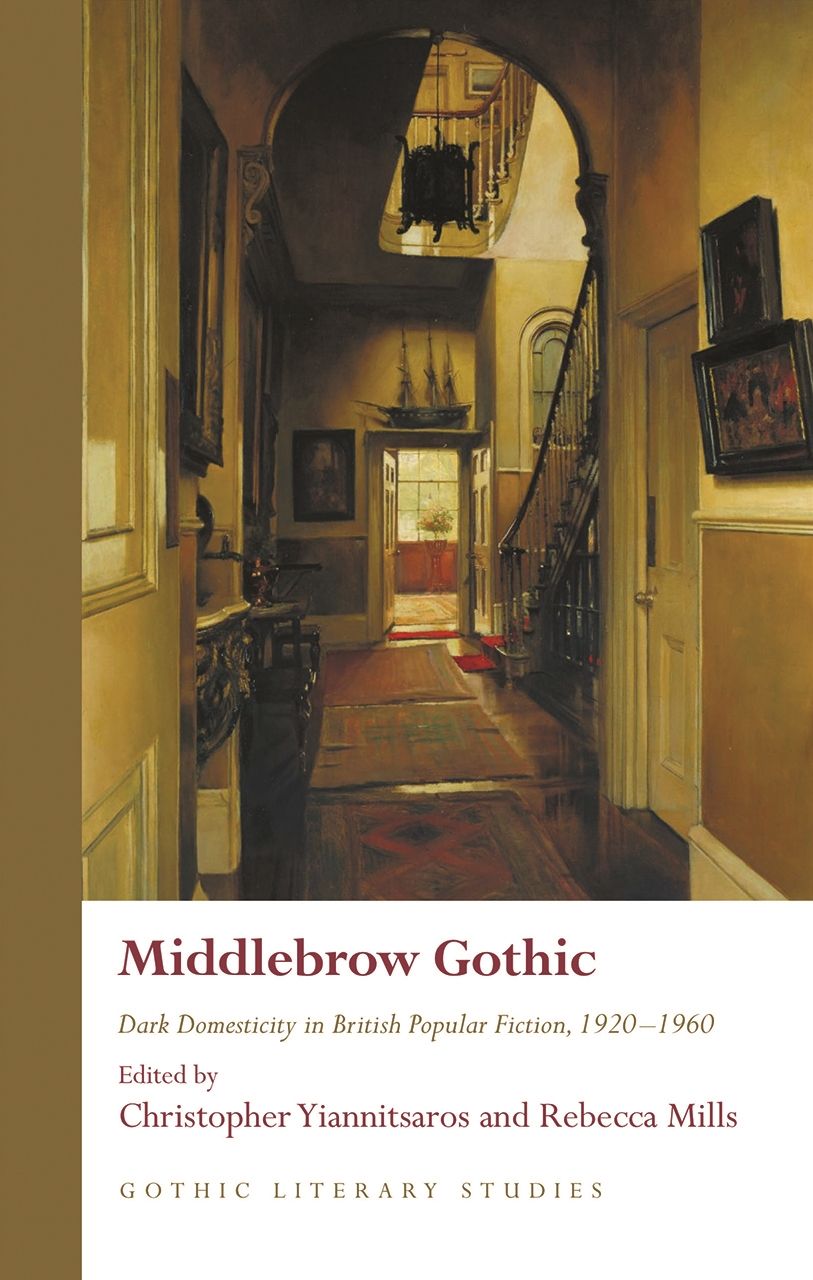
Middlebrow Gothic
Dark Domesticity in British Popular Fiction, 1920–1960
Highlights the work of middlebrow authors who employ Gothic conventions to interrogate and subvert the idealization of domestic family and marital life following the trauma of the First and Second World Wars.
The essays in Middlebrow Gothic include new perspectives on well-known authors such as Agatha Christie, Daphne du Maurier, and Elizabeth Bowen, as well as recovering less-studied authors including Molly Keane (M. J. Farrell), Elizabeth Taylor, and Margiad Evans (Peggy Whistler), demonstrating their valuable contributions to the history and evolution of Gothic literature. The fictions discussed reveal “home sweet home” to be anything but a sanctuary; the middle-class family home is rather a sinister site of buried secrets, paranoia, and violence that spreads beyond the house to the social spaces and landscapes that lie beyond.


Table of Contents
Notes on contributors
Introduction: Homing in on the ‘middlebrow Gothic’, Christopher Yiannitsaros and Rebecca Mills
Part I: Dangerous homes, dangerous families
Chapter 1: The yellow wall-paper: Interior decorating and the family romance in Agatha Christie’s Sleeping Murder’, Christopher Yiannitsaros
Chapter 2: Subverting and distorting the home in a corpus of Weird domestic fiction from Handheld Press, 1920–1948, Kate Macdonald
Part II: Dark places, Gothic geographies
Chapter 3: Bordering the Gothic: the ‘Feminine Middlebrow’ and Anglophone Welsh Writing, Diana Wallace
Chapter 4: ‘It doesn’t take a witch to see goat-prints’: Gothic palimpsests and remote communities in Golden Age detective fiction, Brittain Bright and Rebecca Mills
Chapter 5: Queer spaces and monstrous women in Molly Keane’s Gothic parody Devoted Ladies (1934), Christopher Yiannitsaros and Rebecca Mills
Part III: The post-war Gothic condition
Chapter 6: Finding refuge in the spectre of war in Elizabeth Bowen’s A World Of Love (1955), Layla Ferrández Melero
Chapter 7: Middlebrow Gothic in Elizabeth Taylor’s novels, 1945–53: ‘A Climate of Melancholia’, Sue Kennedy
Chapter 8: Imagined pasts and invading presents: The myth of experience in Daphne du Maurier’s My Cousin Rachel (1951) and The Scapegoat (1957), Laurie B. Huggett
Afterword: Placing, inhabiting and observing the middlebrow gothic, Simon Thomas
Bibliography