National University of Singapore Press
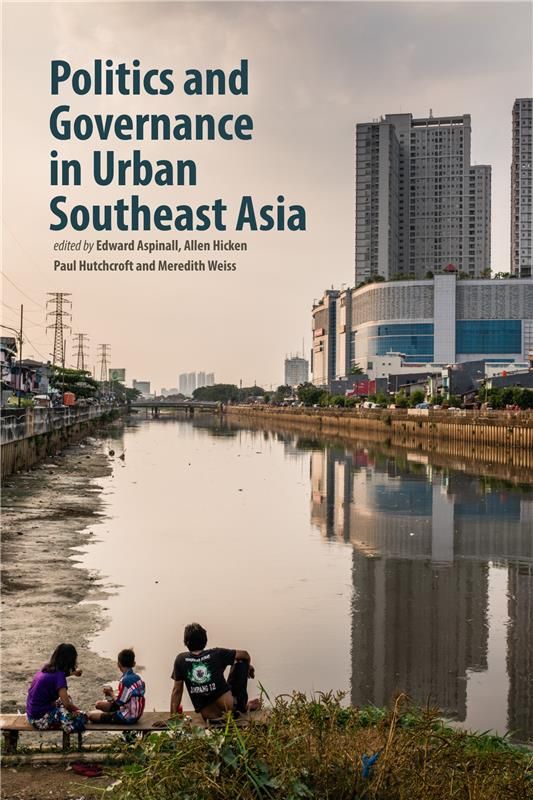
Politics and Governance in Urban Southeast Asia
Distributed for National University of Singapore Press
Politics and Governance in Urban Southeast Asia
As Southeast Asia’s cities continue to swell, this timely volume analyzes urban politics in the region.
Why have some Southeast Asian cities become laboratories of reform while others remain mired in old patterns of patronage politics and substandard public services? This has become an important question now that over half of Southeast Asia’s population lives in urban areas, transforming the politics of the region. Quintessentially urban problems—traffic congestion, sanitation, public transport, housing, and the like—increasingly preoccupy policymakers, while the region’s swelling urban middle classes expect their mayors and city governments to provide ever-better infrastructure and amenities.
Drawing on close case studies of a diverse set of seventeen urban areas across four Southeast Asian countries—Indonesia, Malaysia, the Philippines, and Thailand—this volume offers fresh insights into how the region’s urban politics are changing. It provides a new framework for understanding why some cities are flourishing and others are not. Exploring the factors that shape distinct local governance regimes in these cities, Politics and Governance in Urban Southeast Asia also throws light on how urban residents use community associations, informal networks, and other political mechanisms to access the public services they want and need.
392 pages | 11 maps | 5.98 x 9.02 | © 2027
Asian Studies: Southeast Asia and Australia
Political Science: Political Behavior and Public Opinion, Urban Politics


Table of Contents
Contributors
Acknowledgments
Introduction: Urban Politics, Governance, and Public Goods in Southeast Asia (Edward Aspinall, Paul D. Hutchcroft, Meredith L. Weiss, and Allen Hicken)
Section I: Inclusive Patronage Regimes
1. Iloilo City: Managing the margins in infrastructure development (Rosalie Arcala Hall)
2. Chiang Mai City: Enhancing local governance and fostering grassroots democracy through
healthcare initiatives (Viengrat Nethipo)
3. Cebu City: Parallel structures in mayoral political machines (Weena Gera)
4. Rangsit City: Formal and informal participation, mediation and community committees (Hatchakorn Vongsayan)
5. Pekalongan: The politics of waste management in urban Indonesia (Muhammad Mahsun and Masrohatun)
6. Kota Bharu: What’s good for PAS is good for Kelantan? (Azmil Tayeb)
7. Manila: The challenges of urban rejuvenation amidst entrenched familial bailiwicks
and administrative sclerosis (Cleo Anne A. Calimbahin and Paul D. Hutchcroft)
Section II: Elite Patronage Regimes
8. South Tangerang: Alignment of predatory interests and improving health services (Mochamad Mustafa and Erman A. Rahman)
9. Batu Pahat: Navigating bureaucracy through mediators and Muafakat (Liaw Pey Wen)
10. Sibu: The limits of power delegation (Ngu Ik-Tien)
11. Medan: Seeding political investment in public service reform (Zulkifli Lubis)
12. Parepare: The politics of claim-making, citizenship, and public goods (Haryanto)
Section III: Technocratic Regimes
13. Khon Kaen City: Responsiveness amidst divided government (Sirisak Laochankham and Peerasit Kamnuansilpa)
Section IV: Encompassing Regimes
14. Petaling Jaya: Responsiveness without accountability (Chong Eu-Choong)
15. Nakhon Si Thammarat: The mobilisation of village health volunteers (Amporn Marddent and Vithaya Arporn)
16. Surabaya: Grassroots mobilisation, women volunteers and urban reform (Noor Rohman and Aniek Nurhayati)
17. Naga City: The challenges of remaining a paragon of good governance (Mary Joyce Bulao)
Index